The inks used in these works are made rather than bought. Source materials are gathered from
local environments such: as my home garden and pavements, kitchen scraps, and the university
metalwork shop and a few from my homeland of Rio de Janeiro, Brazil. Copper scraps, rust, acorn
caps, oak husks, pine cones, red cabbage, hibiscus, staples removed from canvases, onion skins,
avocado pits and skins, soils, bark, and fallen petals. My palette is shaped by place, season, and
availability rather than predetermined colour outcomes.
Colour is extracted through soaking, simmering or boiling, with processes depending on the
material and times ranging from hours to several weeks. The resulting liquid inks may be modified
using household acids, alkalis, or metal salts to shift their chemistry: vinegar to brink out pink hues,
baking soda or lye bring green hues, alum to intensify, iron to darken toward deep greys and blacks.
More often, inks are left raw, their pH modified directly in the painting, allowing reactions to occur
on the surface itself.
Unlike commercial paints, these inks do not behave uniformly. No two batches are identical.
Organic source materials vary by season, soil, and age; water chemistry differs between recipes;
even a residue left in a pan from a previous session can alter a colour. While some ink-makers take
scientific precautions to minimise these variables as far as possible, I choose to see them as part of
the work’s material agency. The unexpected result of an added modifier, an ink left too long on the
heat, two colours meeting unpredictably on a wet surface: these are not failures but events, carrying
information about the material's own nature.
These inks are also subject to change over time. They may fade, deepen, or shift in response to light
and air. Rather than treating this as a limitation, the work embraces it: the painting continues to
live after it leaves the studio, a record not just of how the inks were applied, but of how they behave
across time.
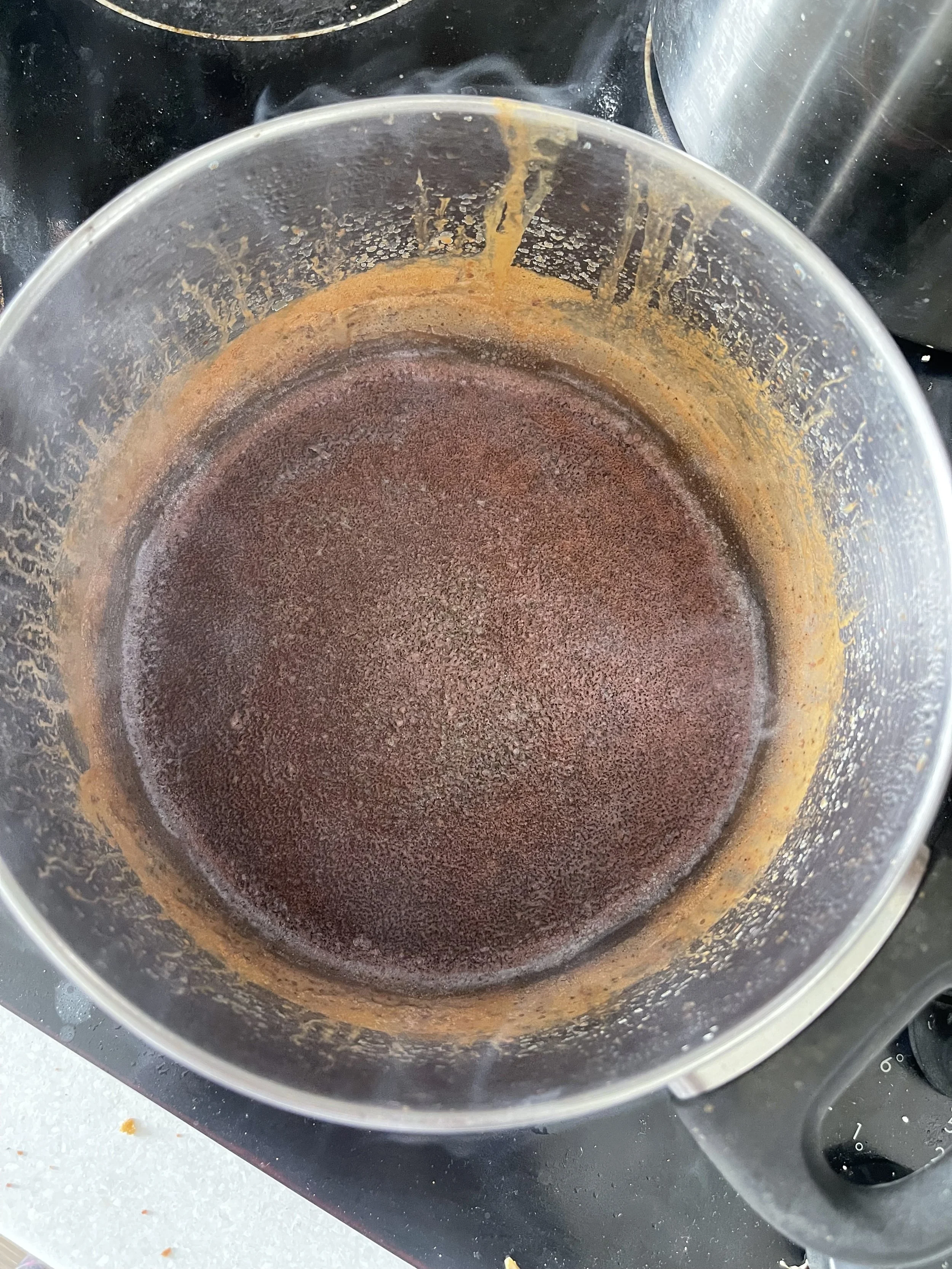
Burning Inks
Experimenting with buying oxide-based inks to modify colour.
Rust ink from recycled tin. This was originally a tin of Nescau (Nesquick).
