UP CLOSe:
Macro photography
and Microscopy
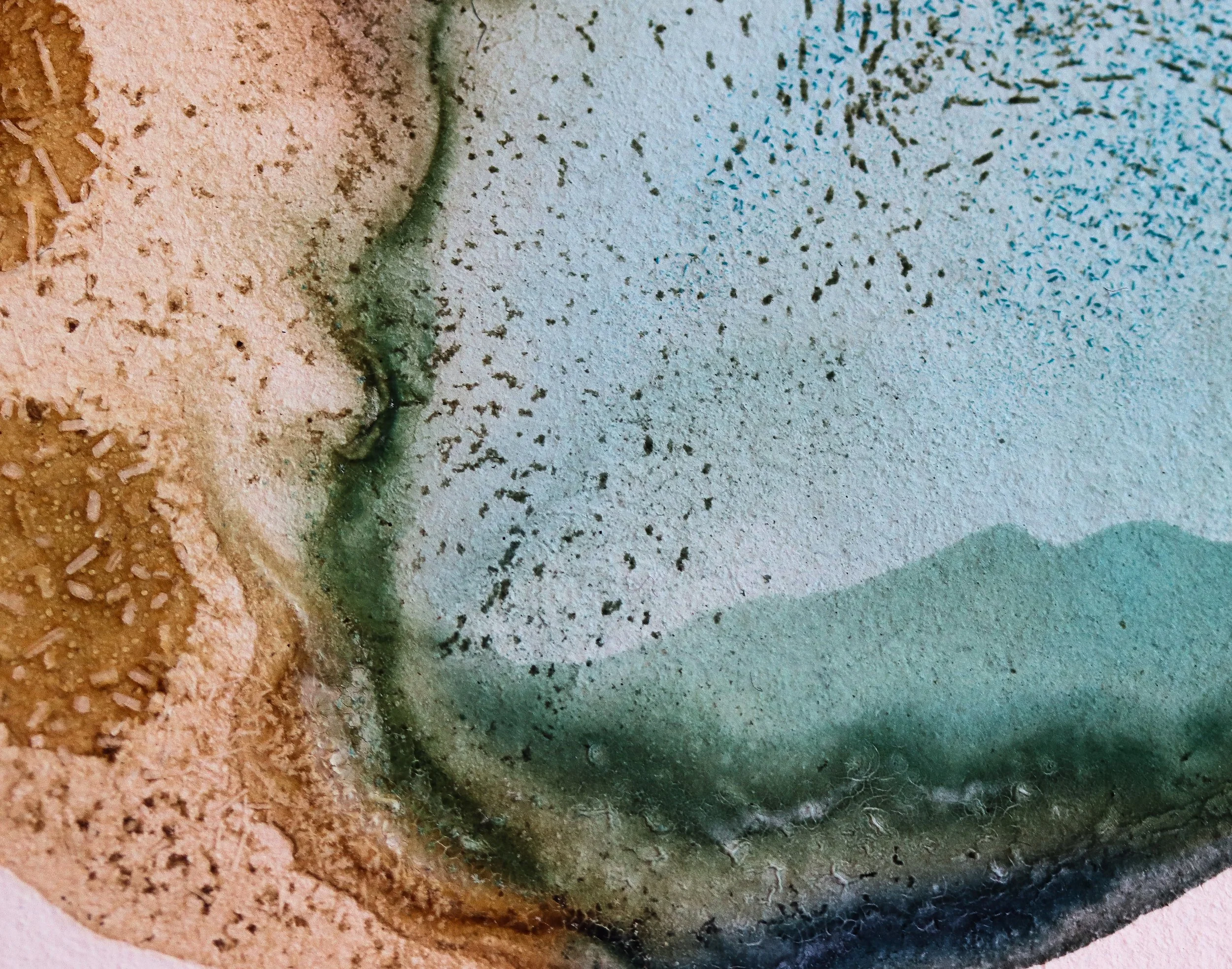
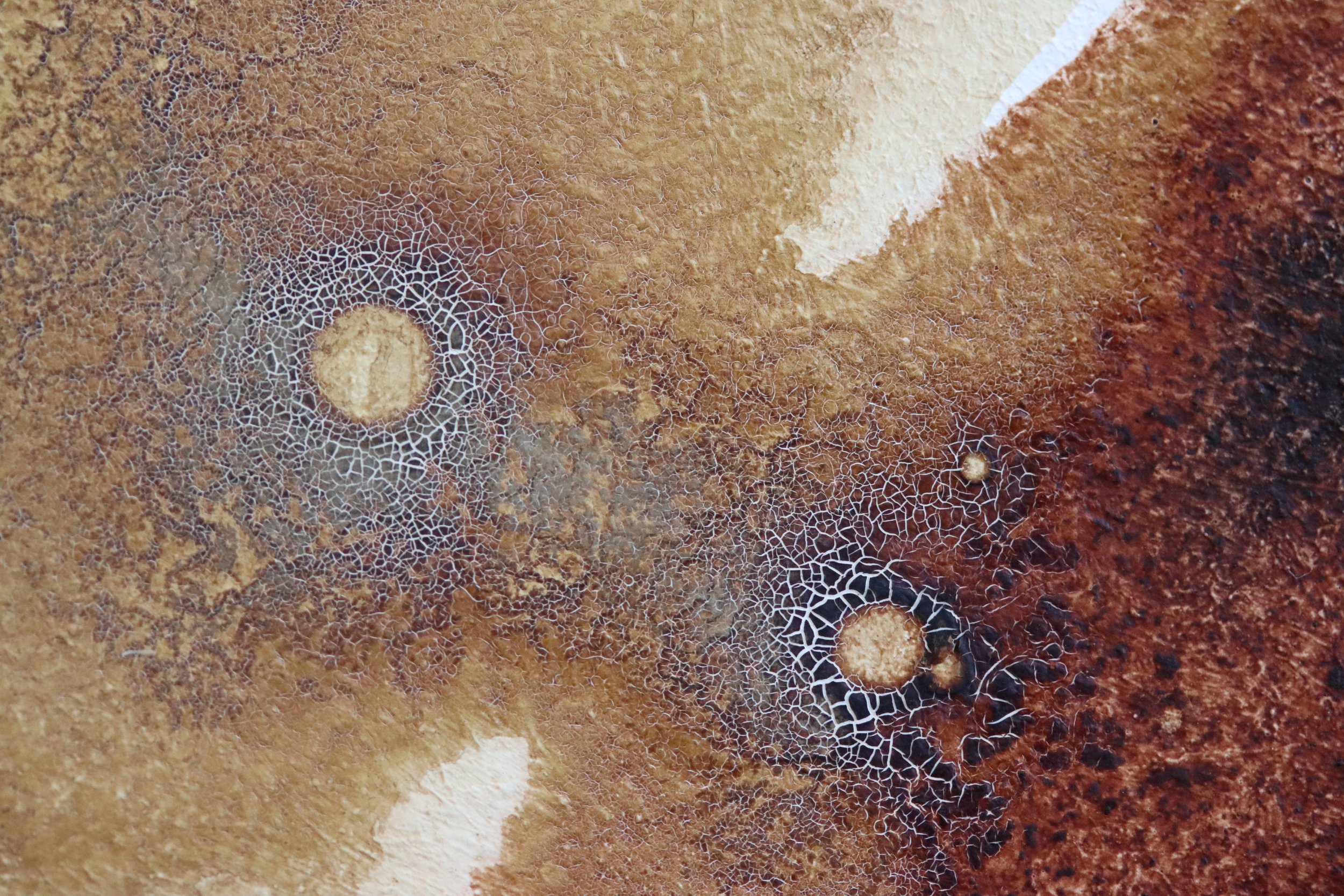
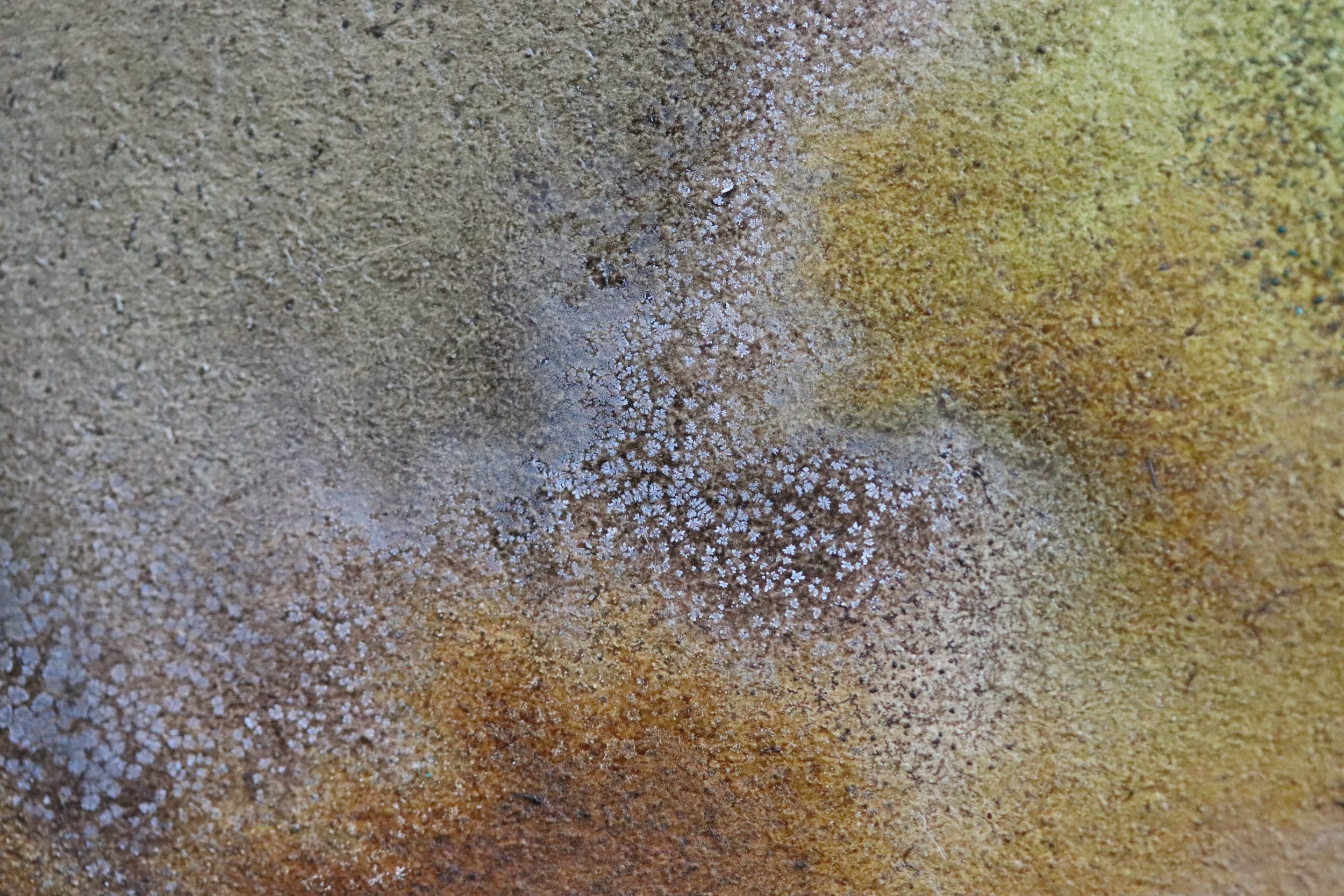
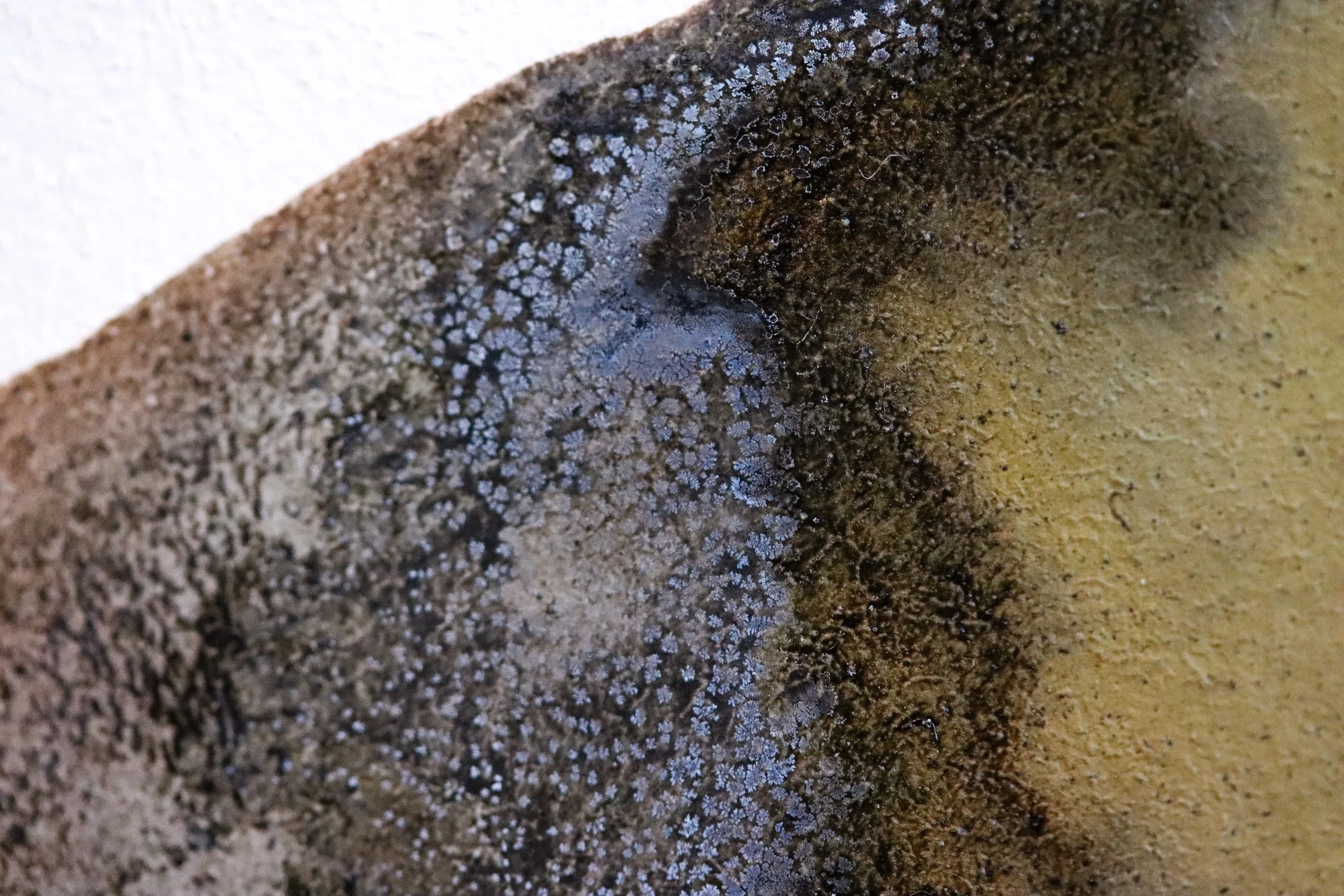
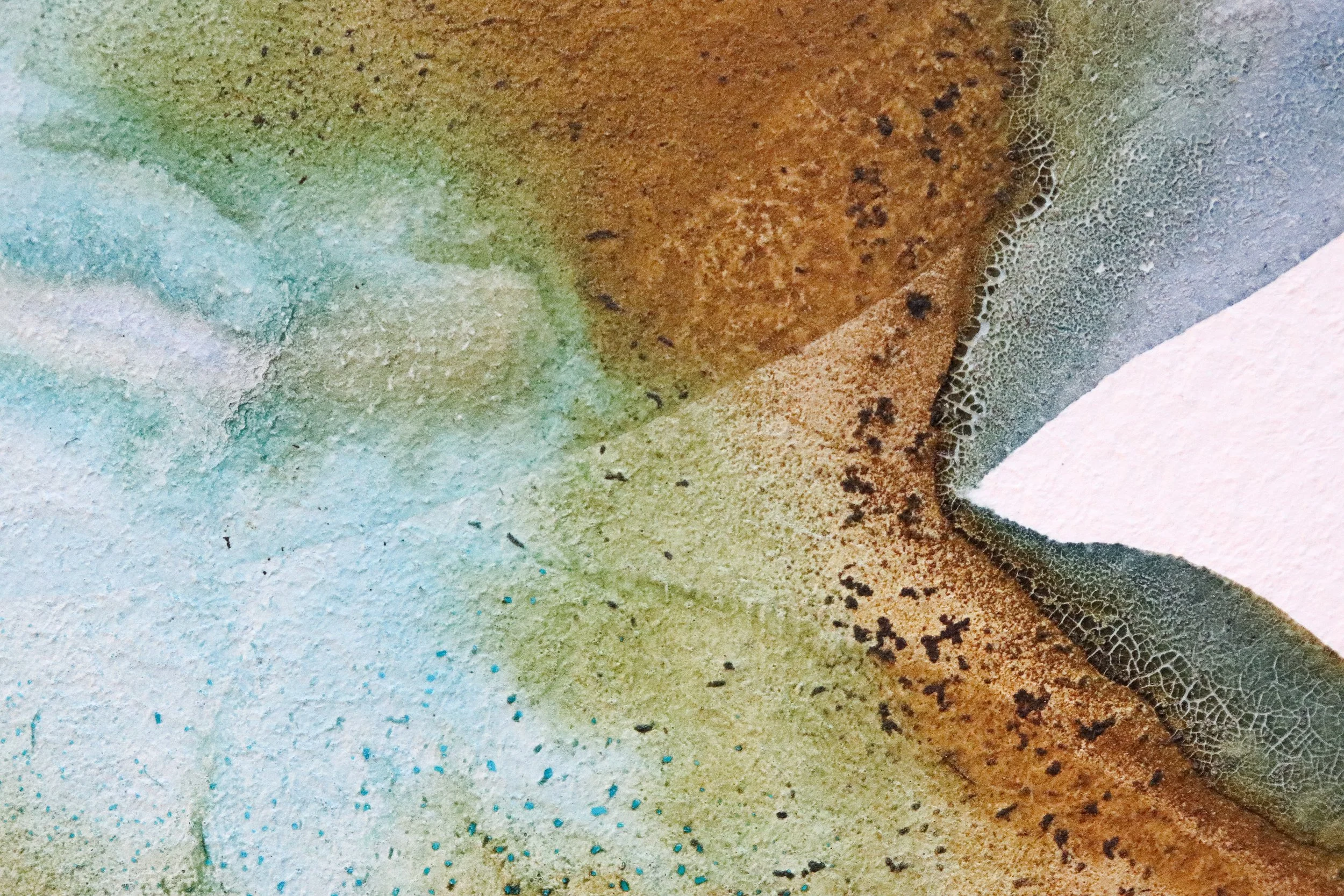
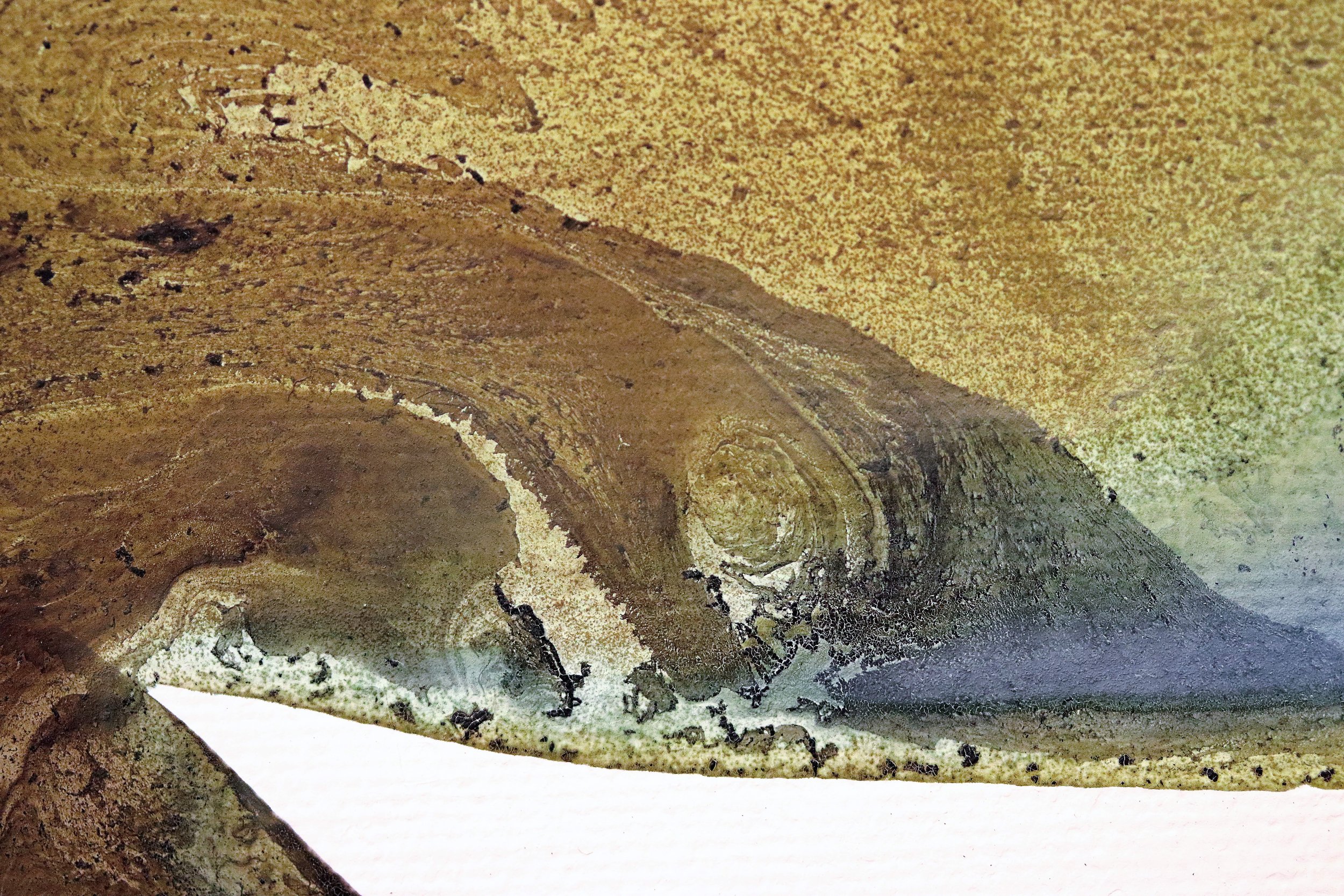
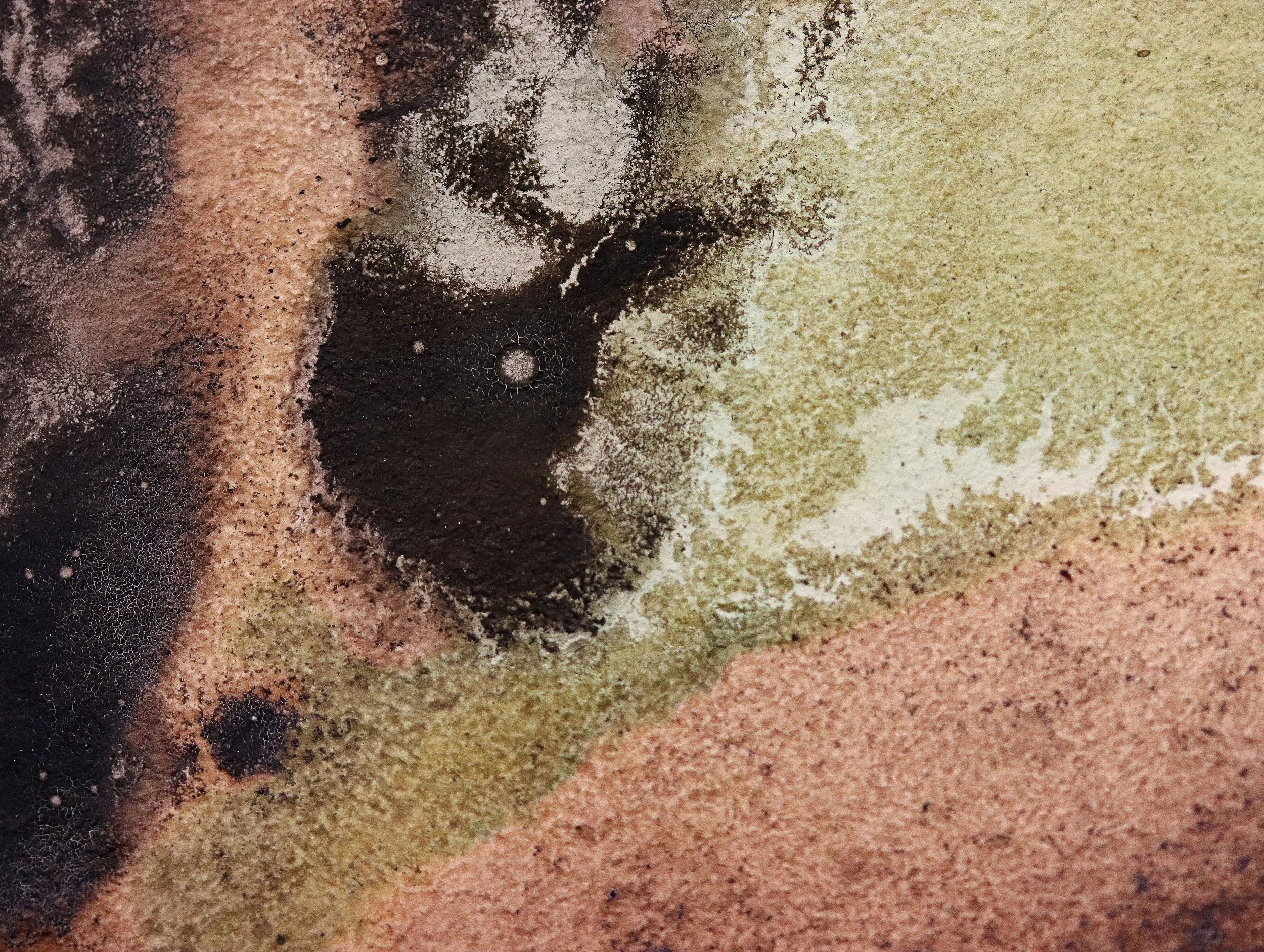
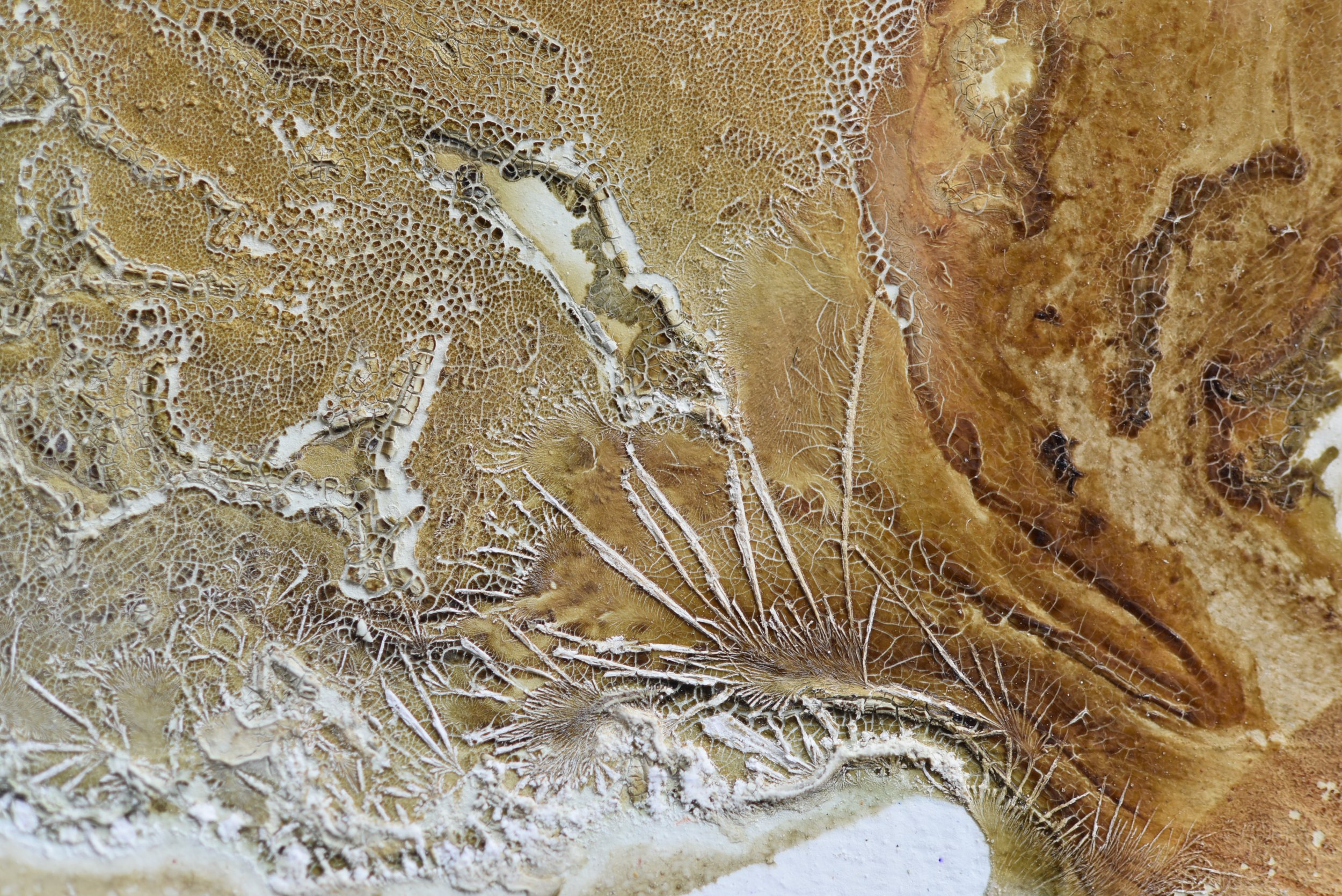
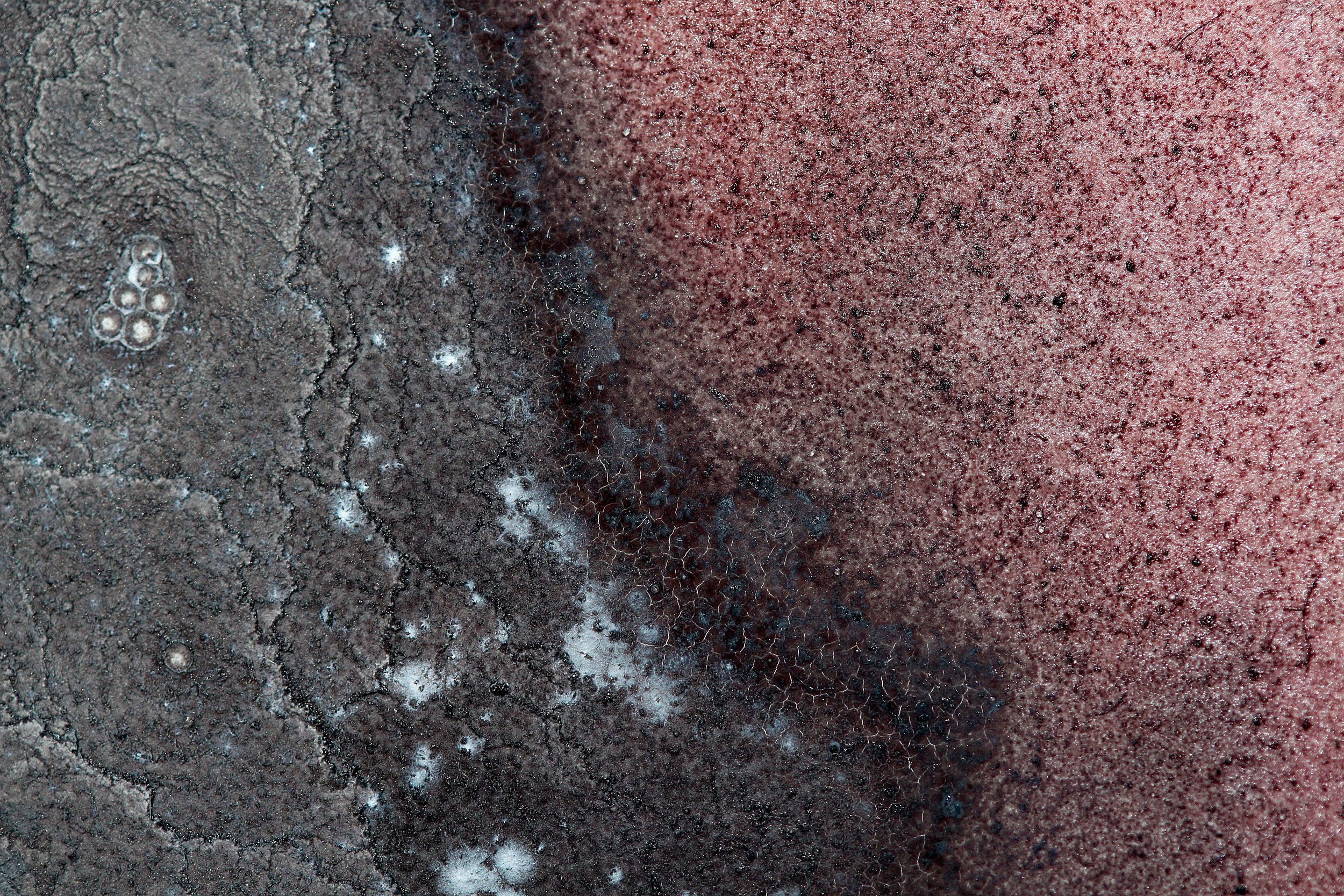
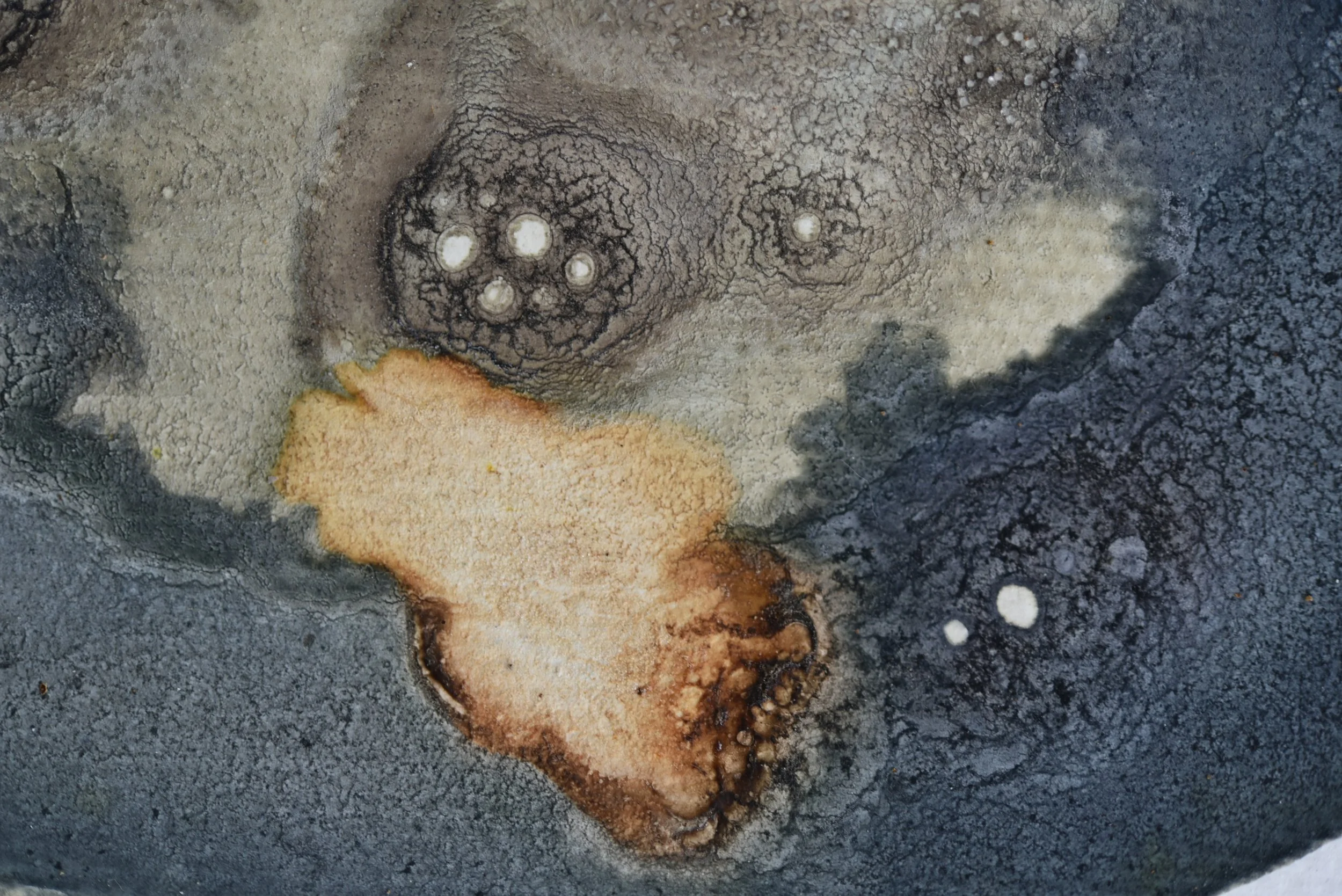
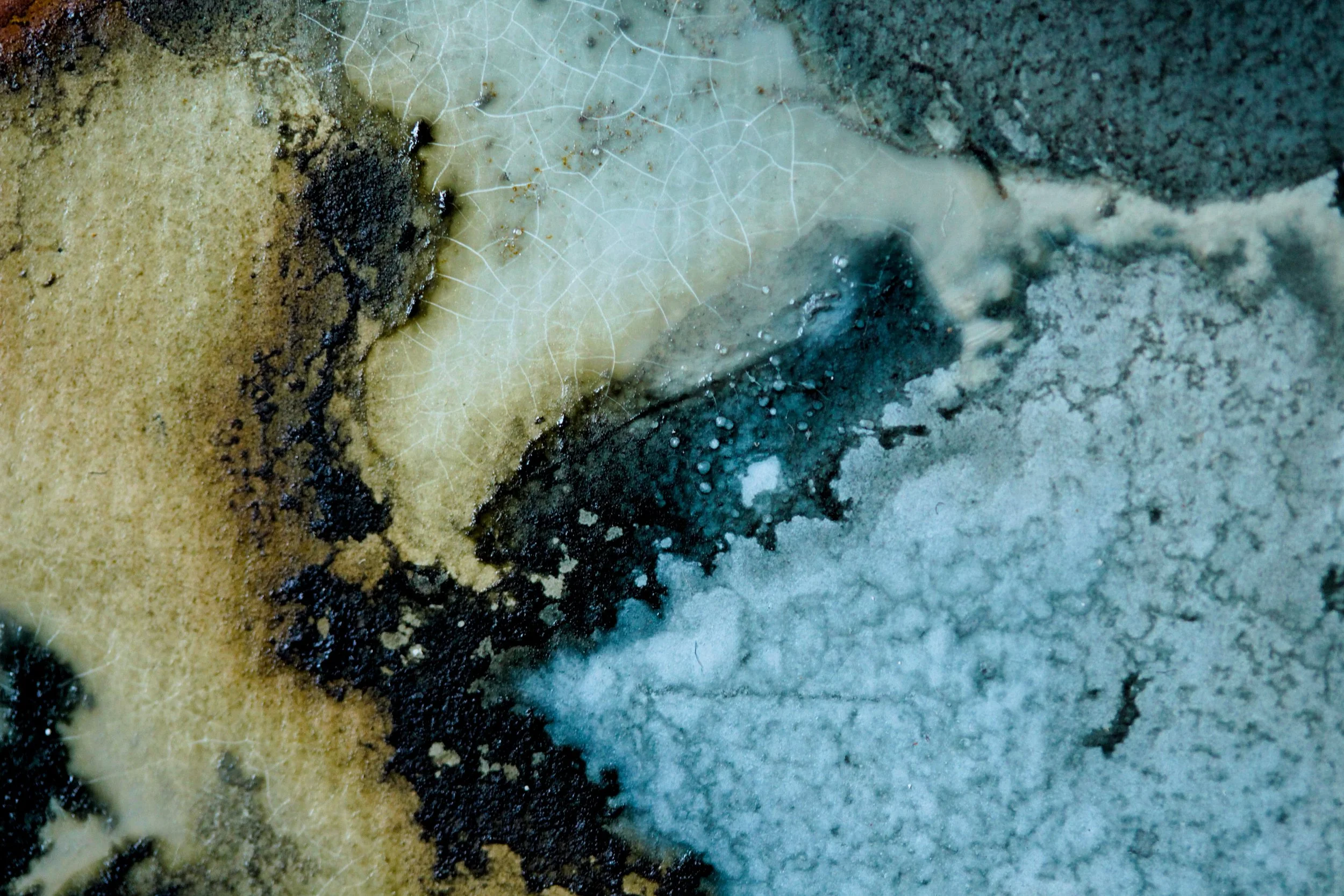
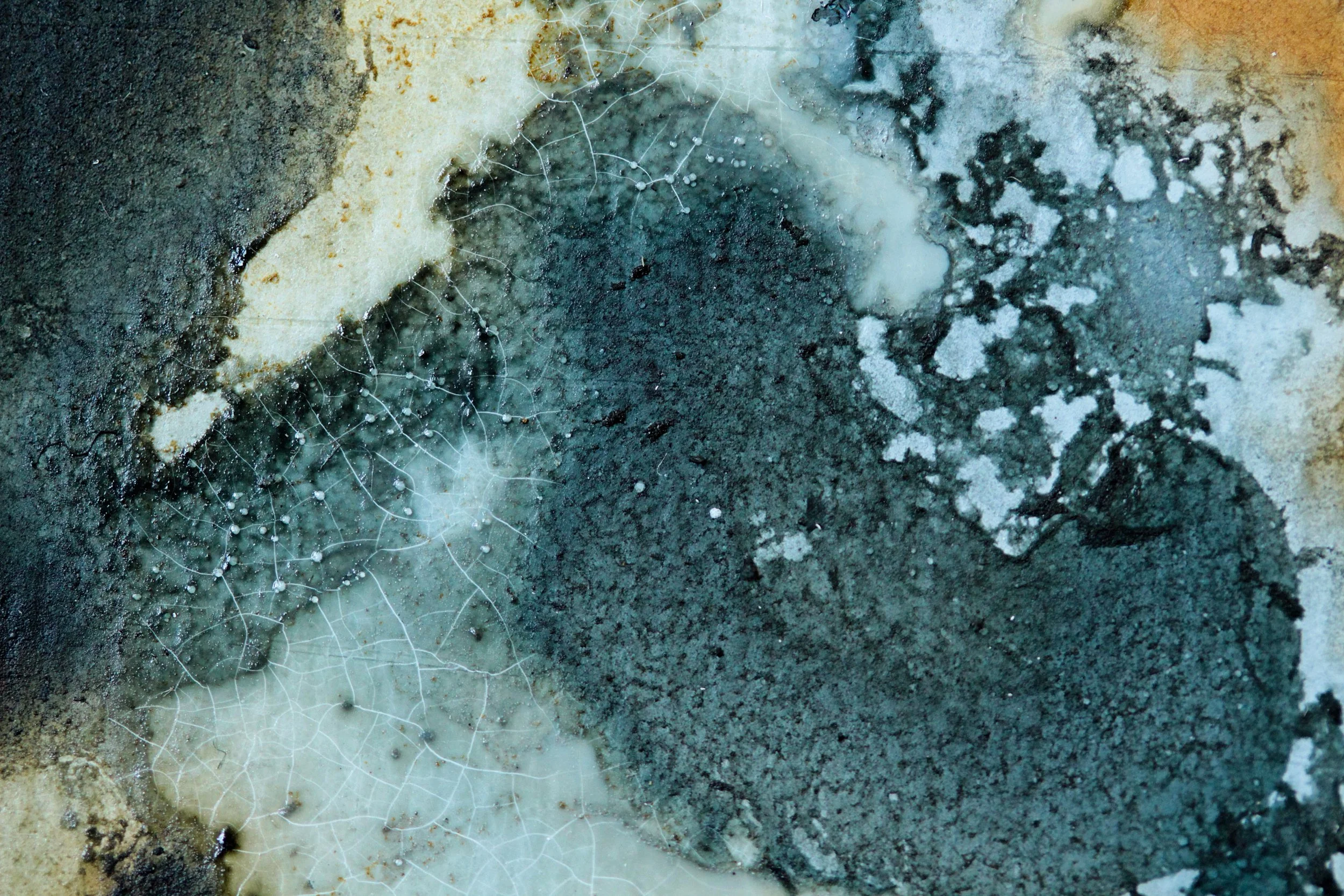
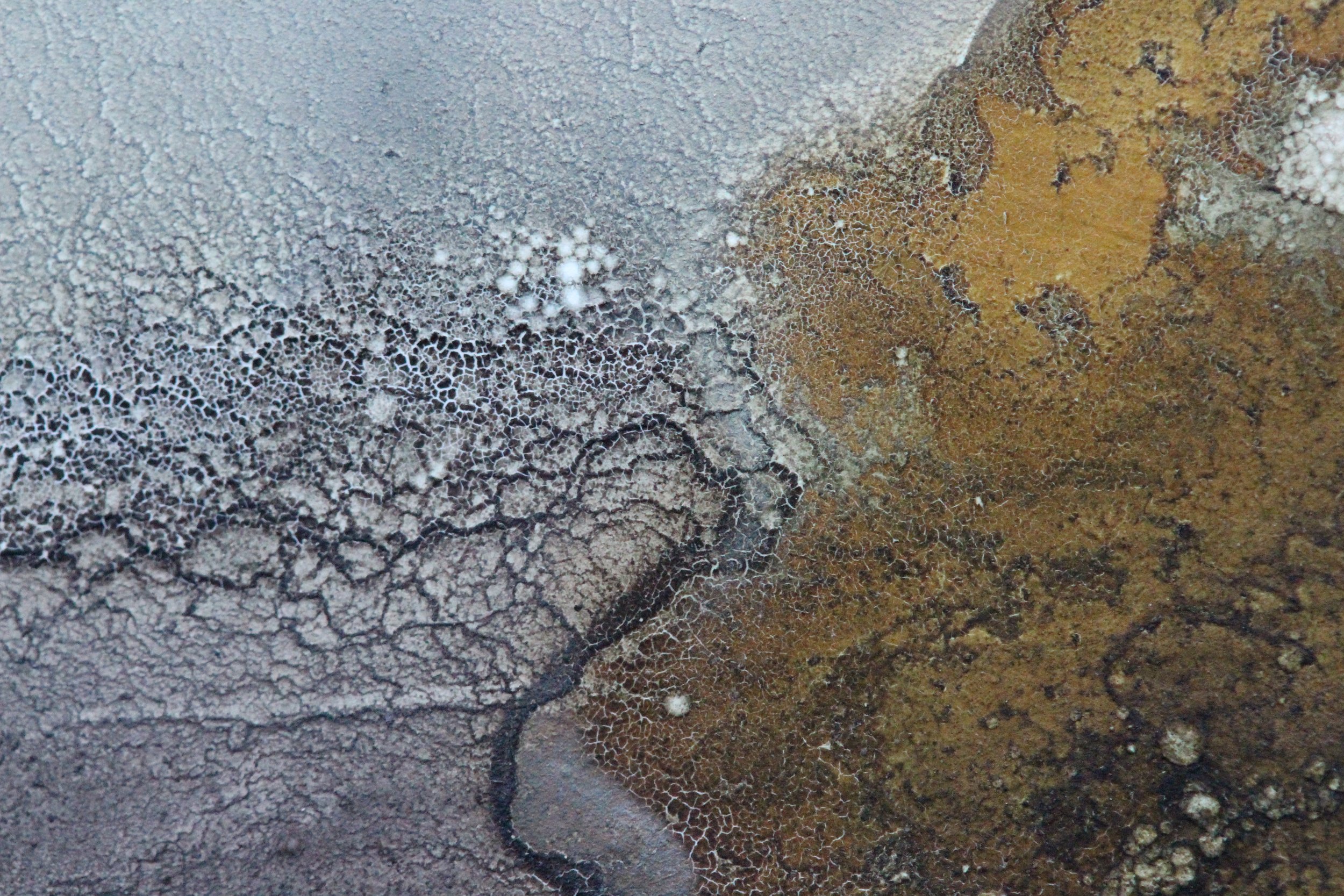
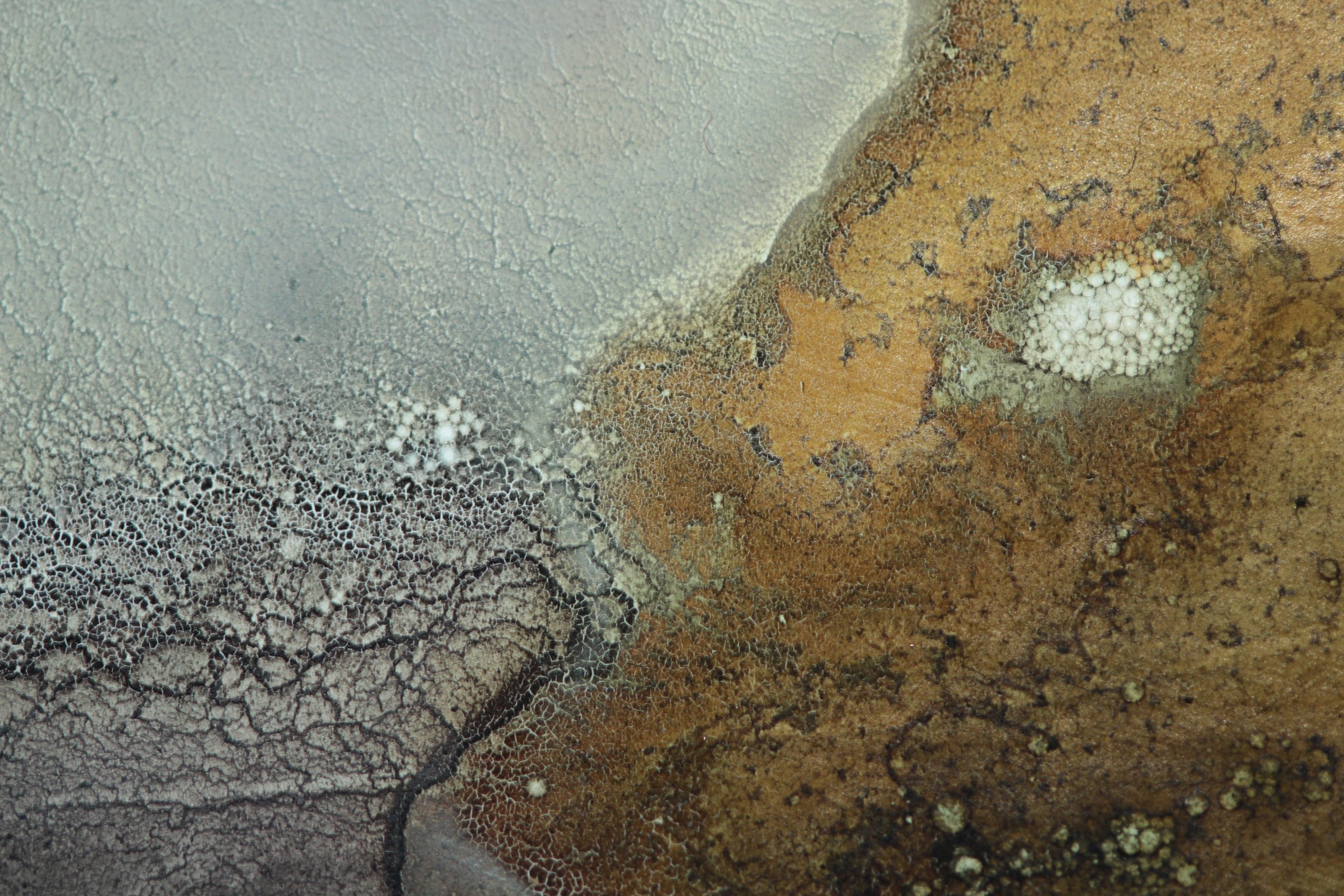
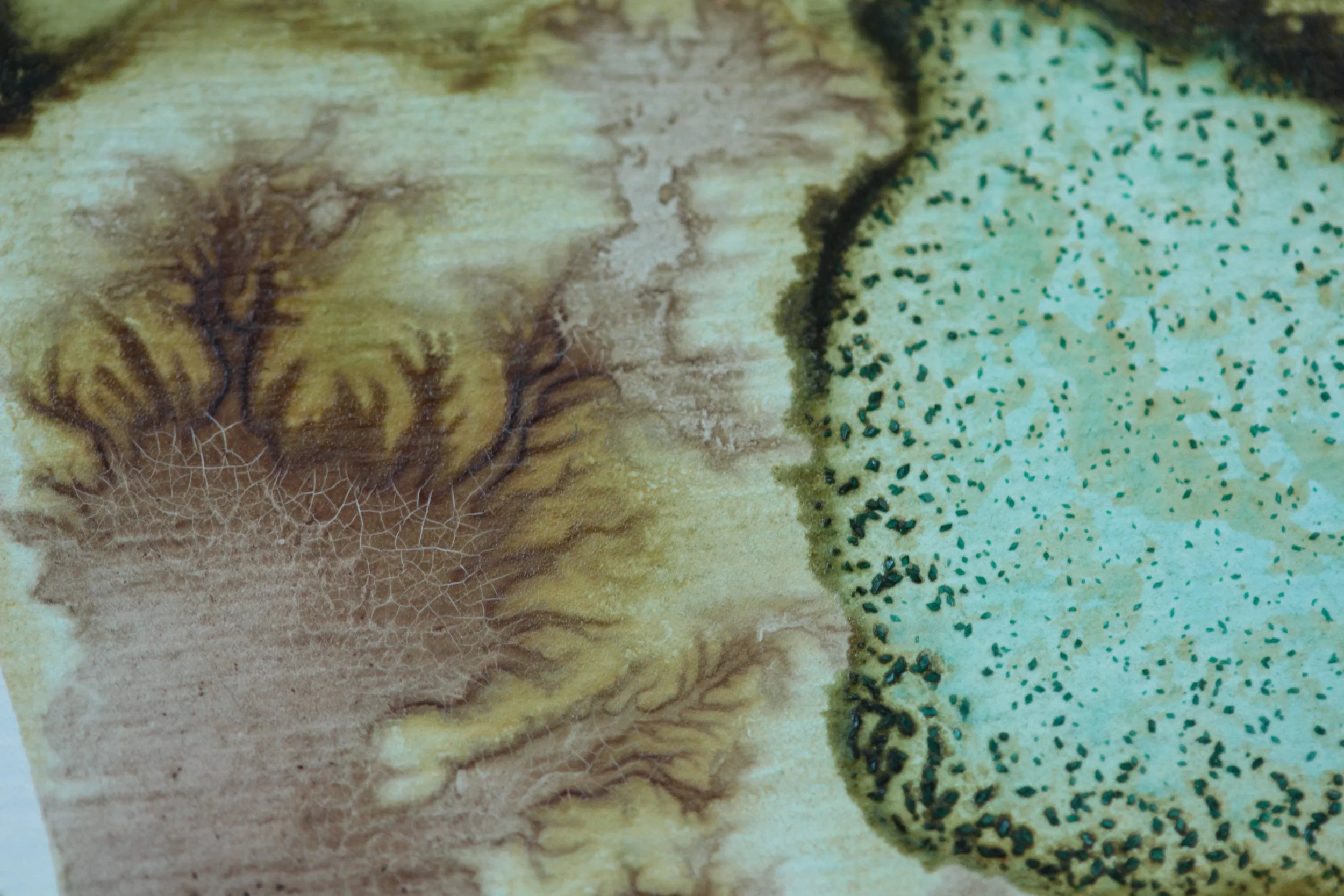
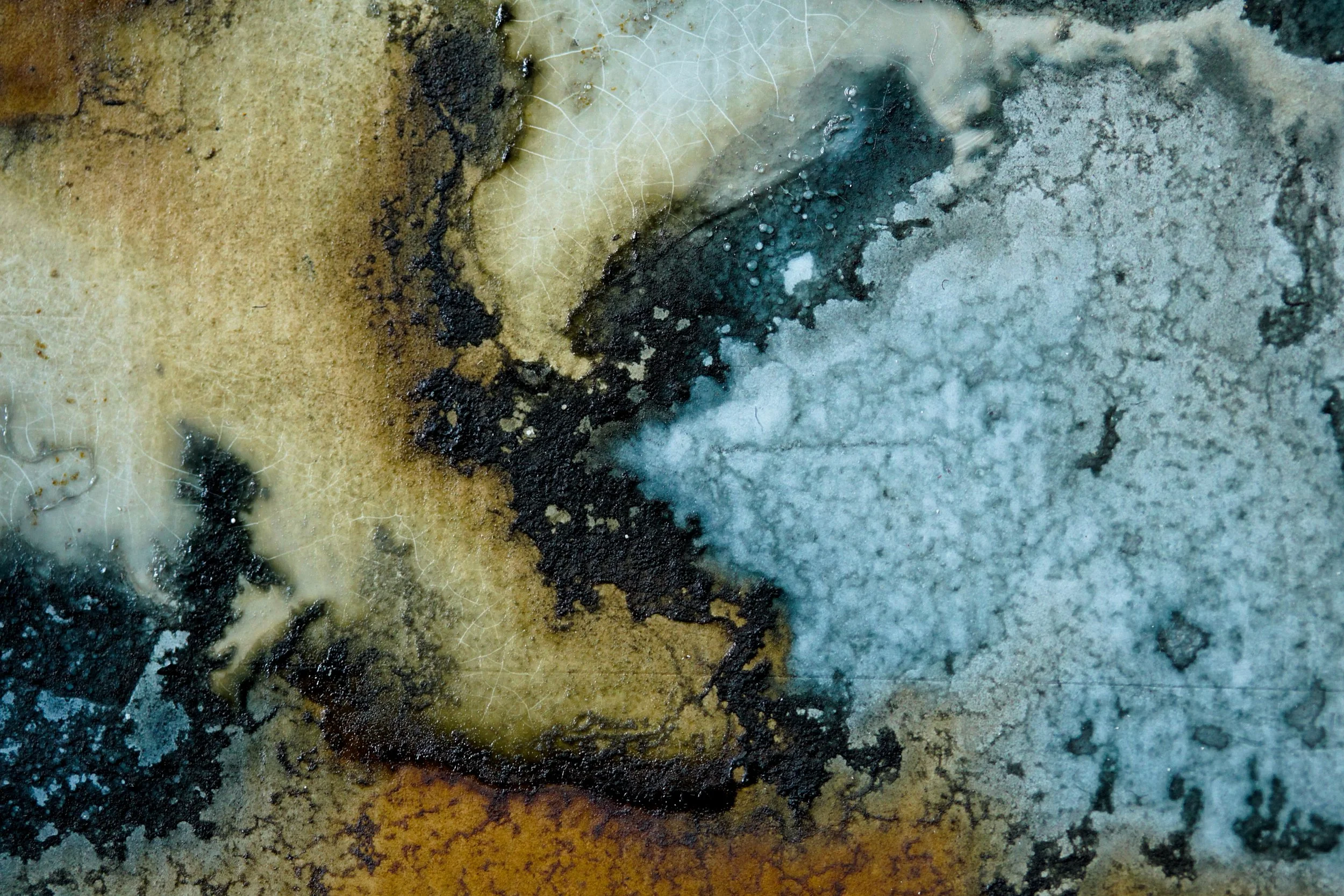
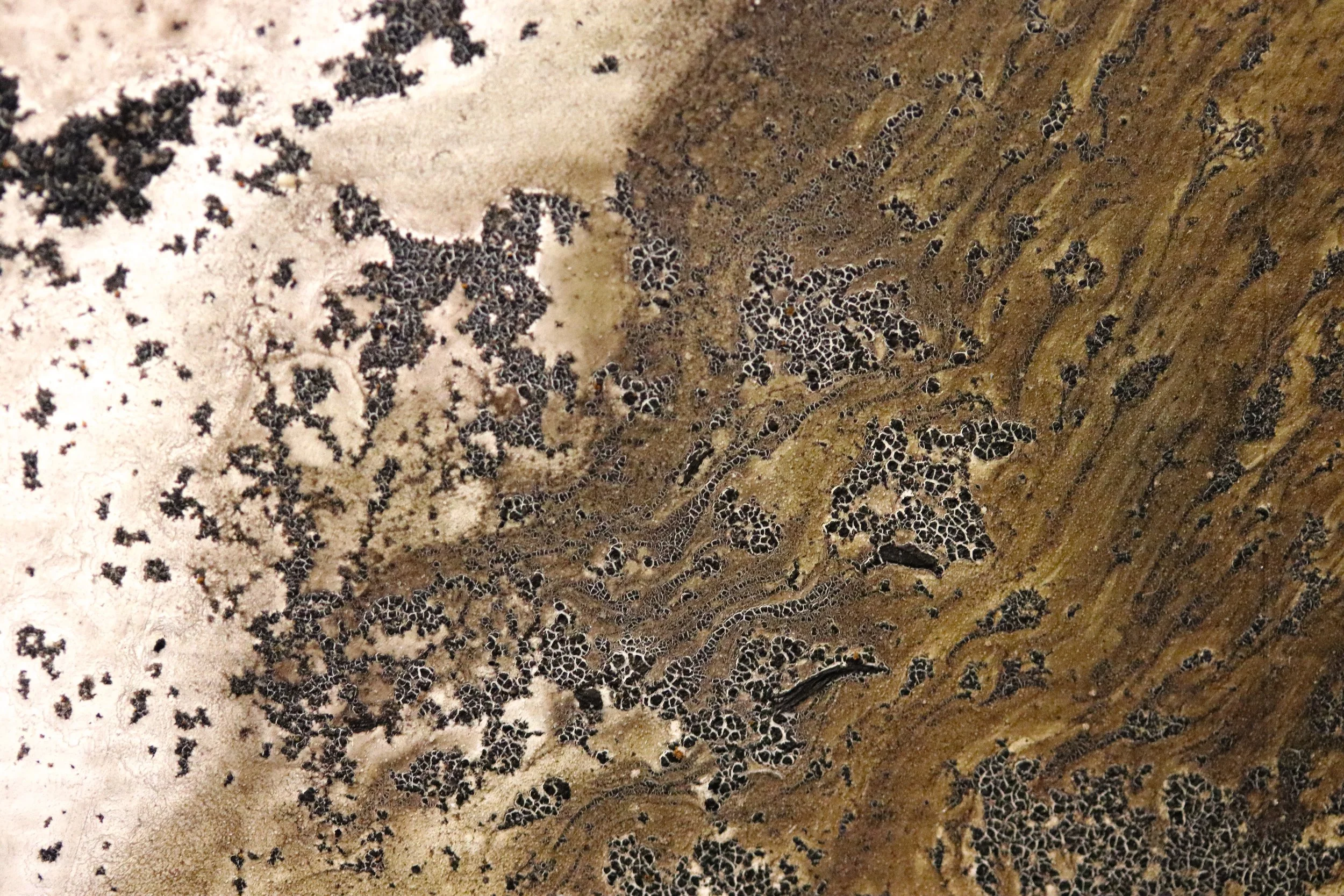
Macro photography became a research tool before it became part of how the work is shown. By photographing paintings at high magnification—a 60mm macro lens—it became possible to study how pigment settle, pools, fractures, and concentrates across a surface beyond the capacity of the naked eye.
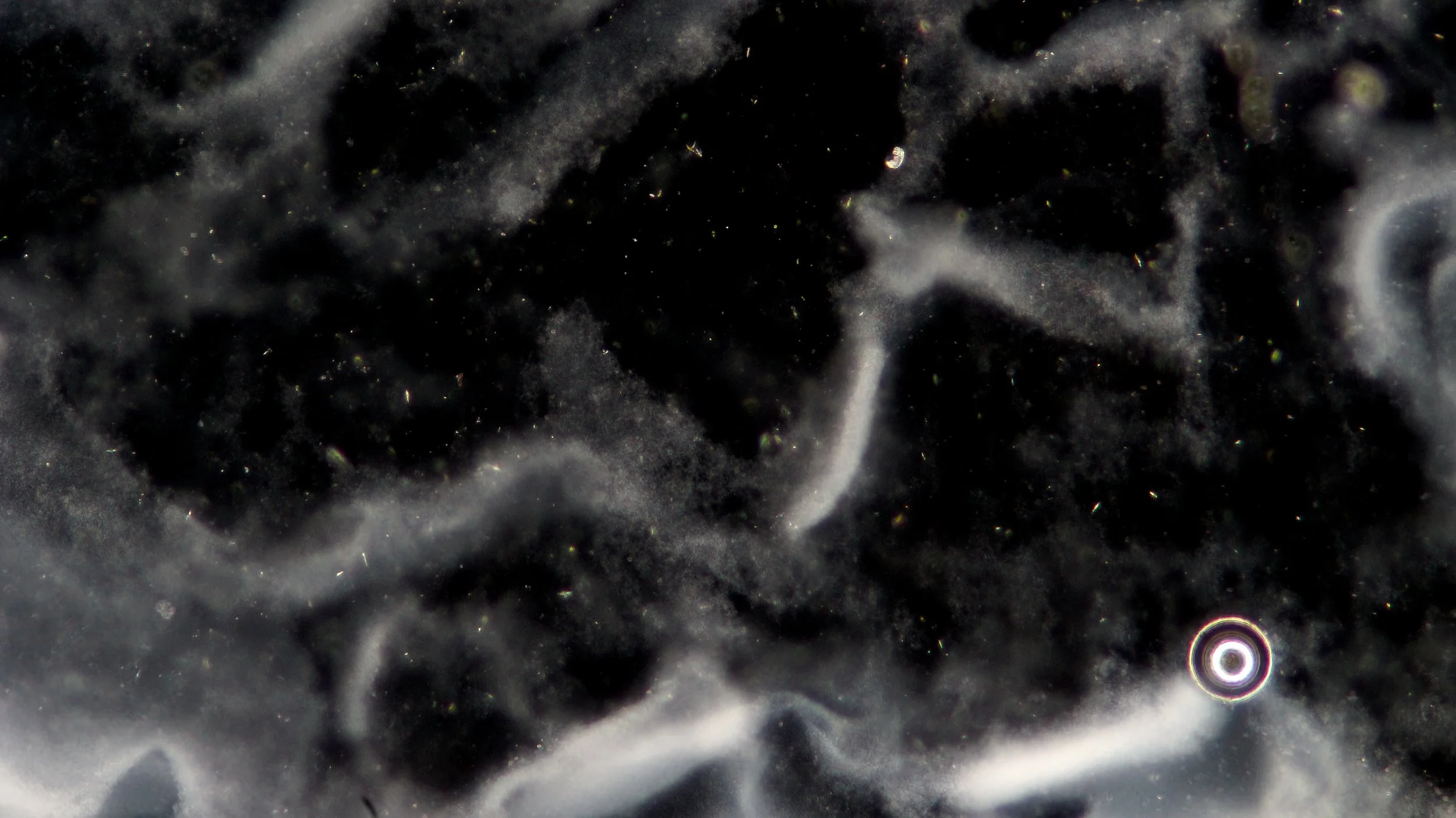
What these photographs revealed was not only technical information but something more revealing: the surface of a painting ceases to look like a painting. Cracks in dried red cabbage ink resemble aerial views of frozen lakes, other like dried river–beds, or beaches seen from above. Crystalline copper salt formations, observed under dark-field microscopy at the ASCUS Lab read as cosmic atmosphere and far away galaxies. The same structures that appear at the scale of a brushstroke echo forms seen at the scale of a landscape or a cosmos.
This collapse of scale is central to the work. At the microscopic level, inks behave through the same fundamental processes that shape the physical world at far larger scales—accumulation, sedimentation, crystallisation, transformation over time. The sublime, usually associated with the overwhelmingly large, reveals itself in the overwhelmingly small.
These macro photographs are not simply documentation. They are a mode of looking that is itself part of the practice, an invitation to slow down and linger with what the surface holds, to observe the painting not as an image made by an artist but as a place where material is still, quietly, doing things.
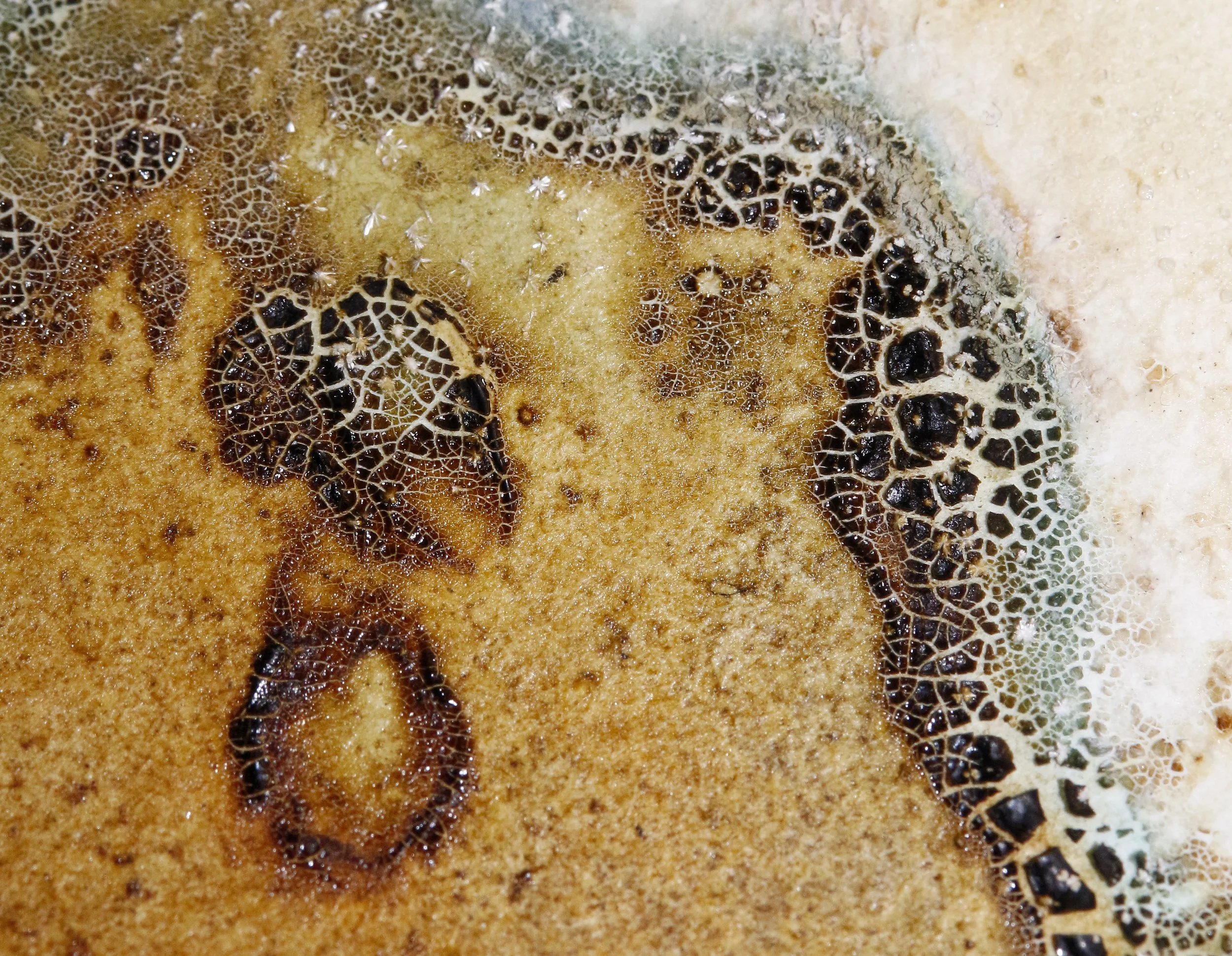
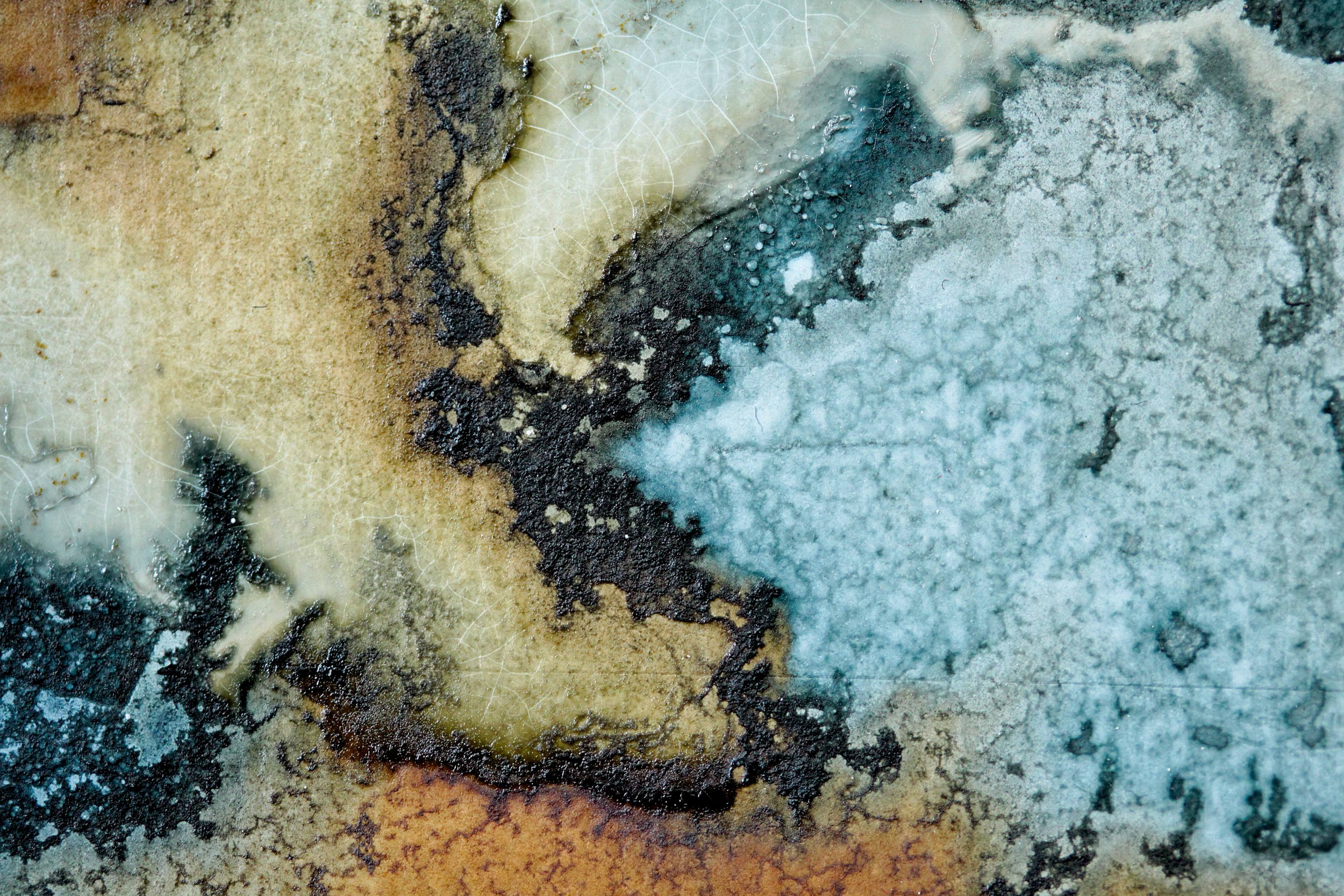
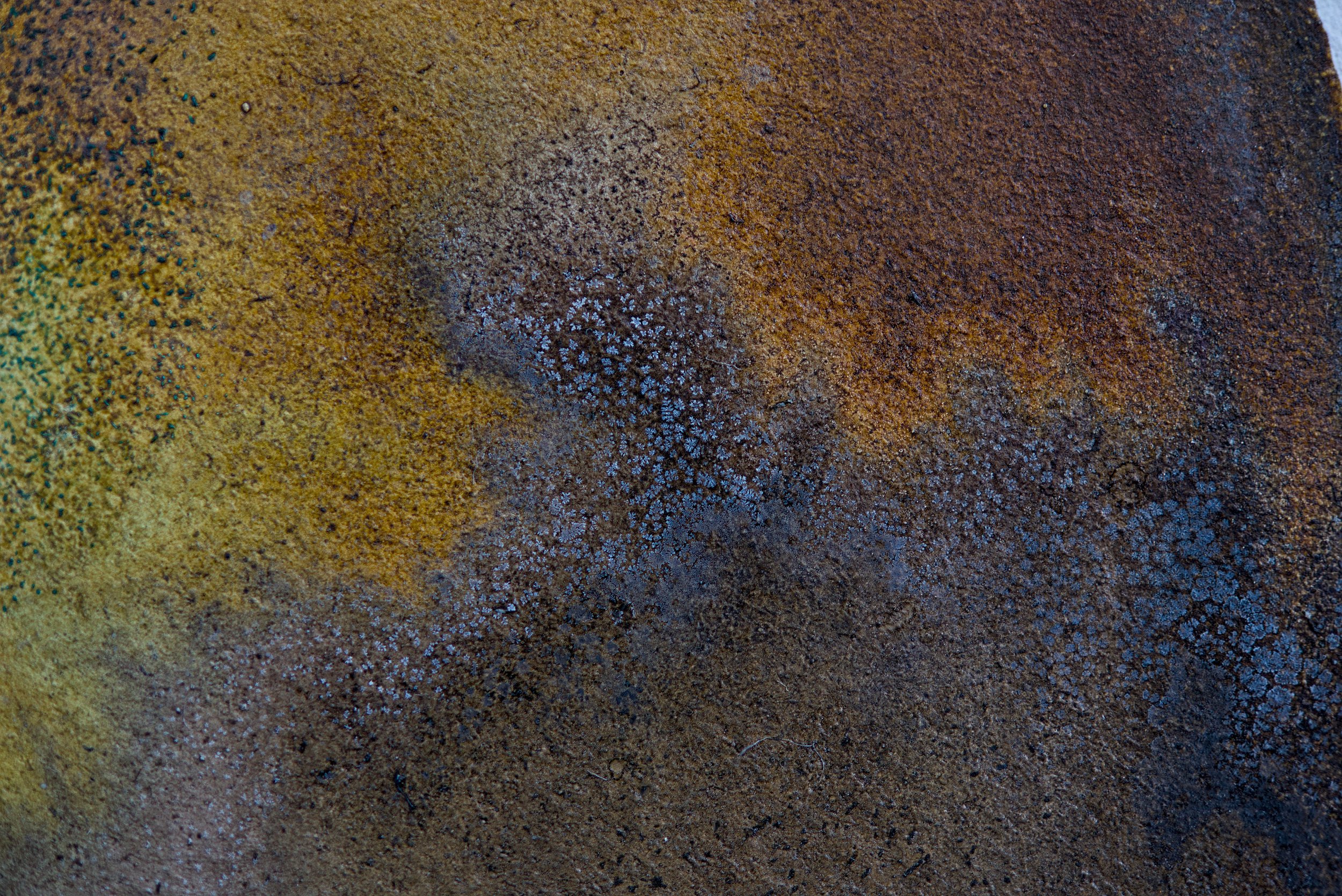
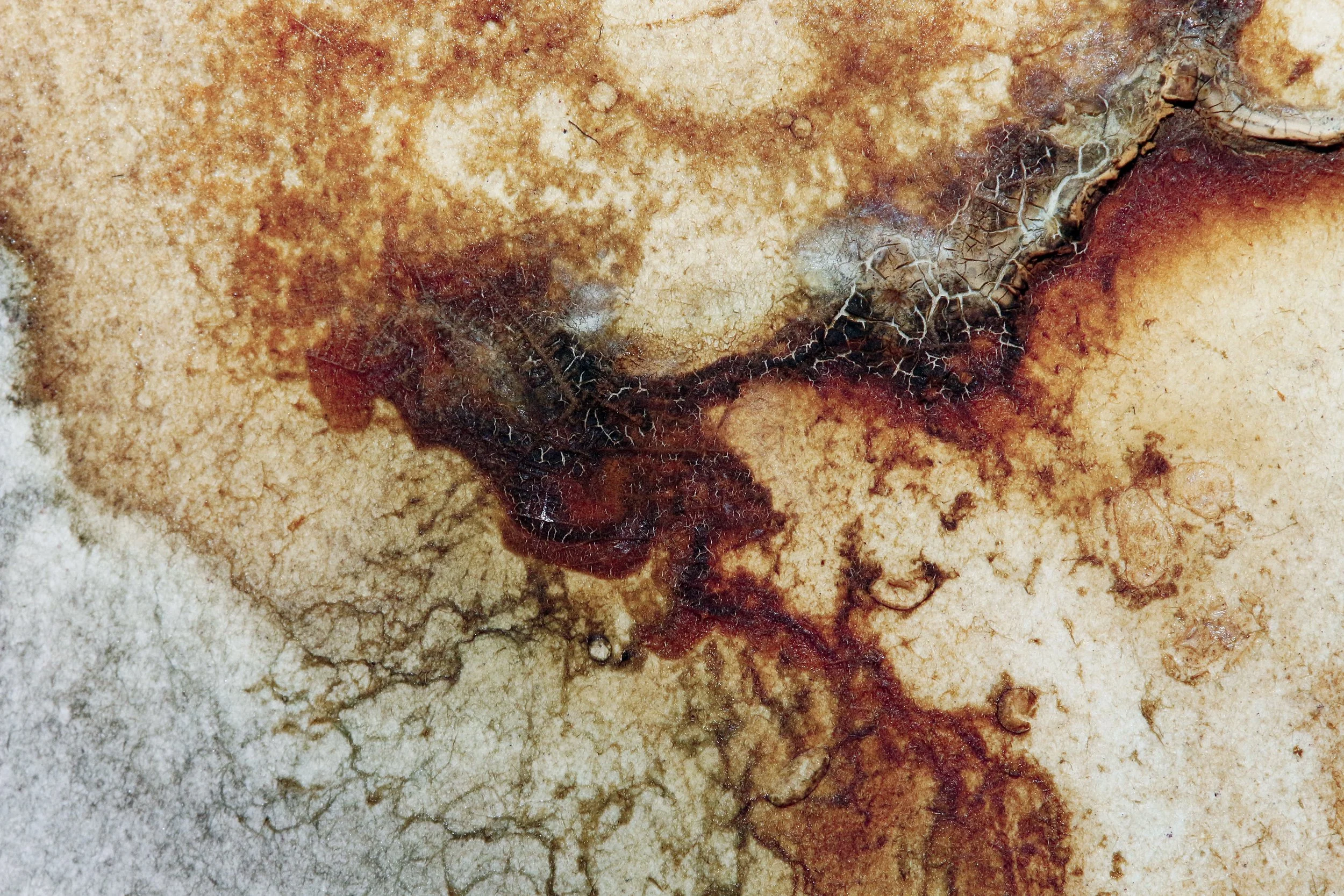
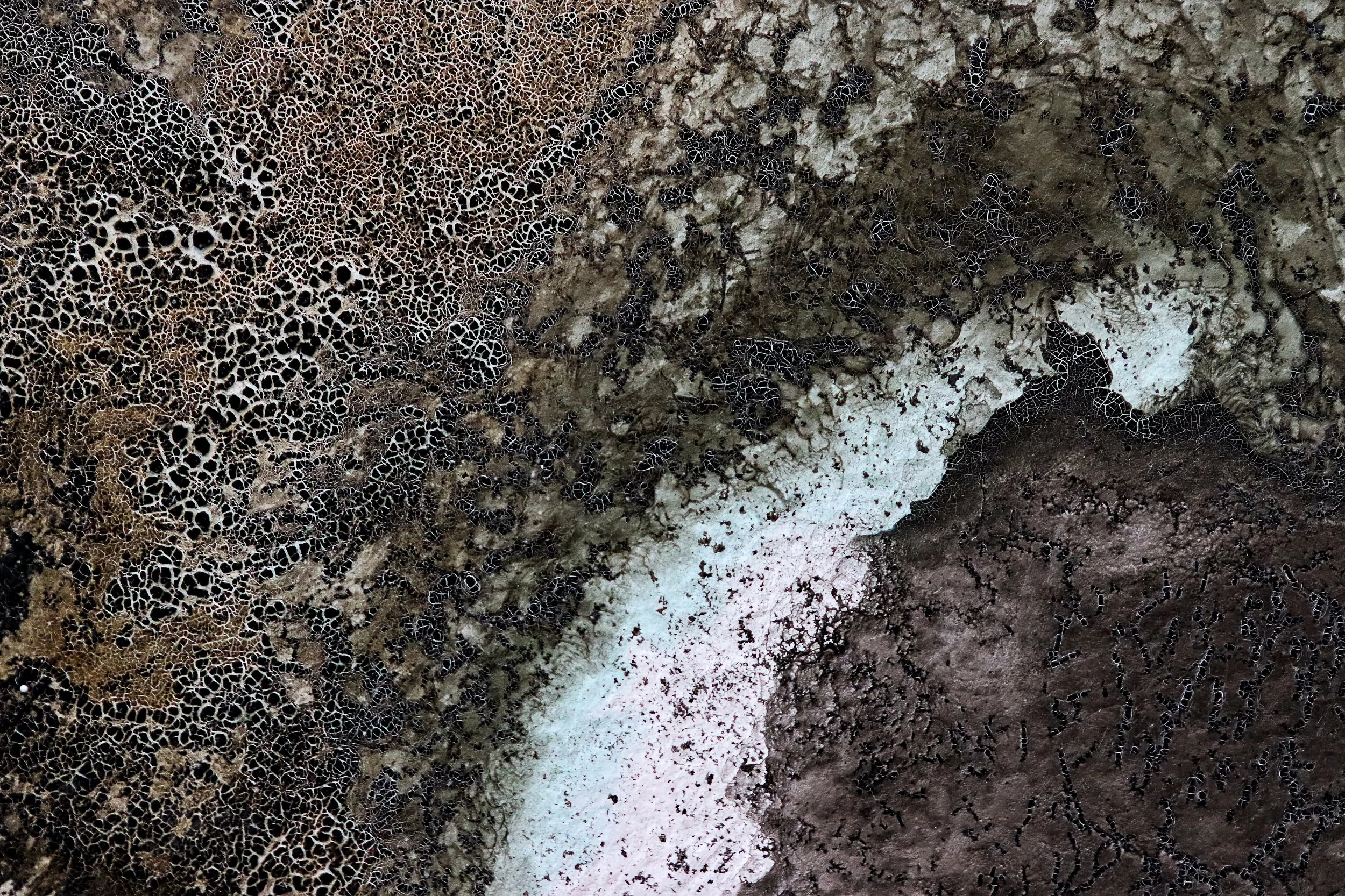
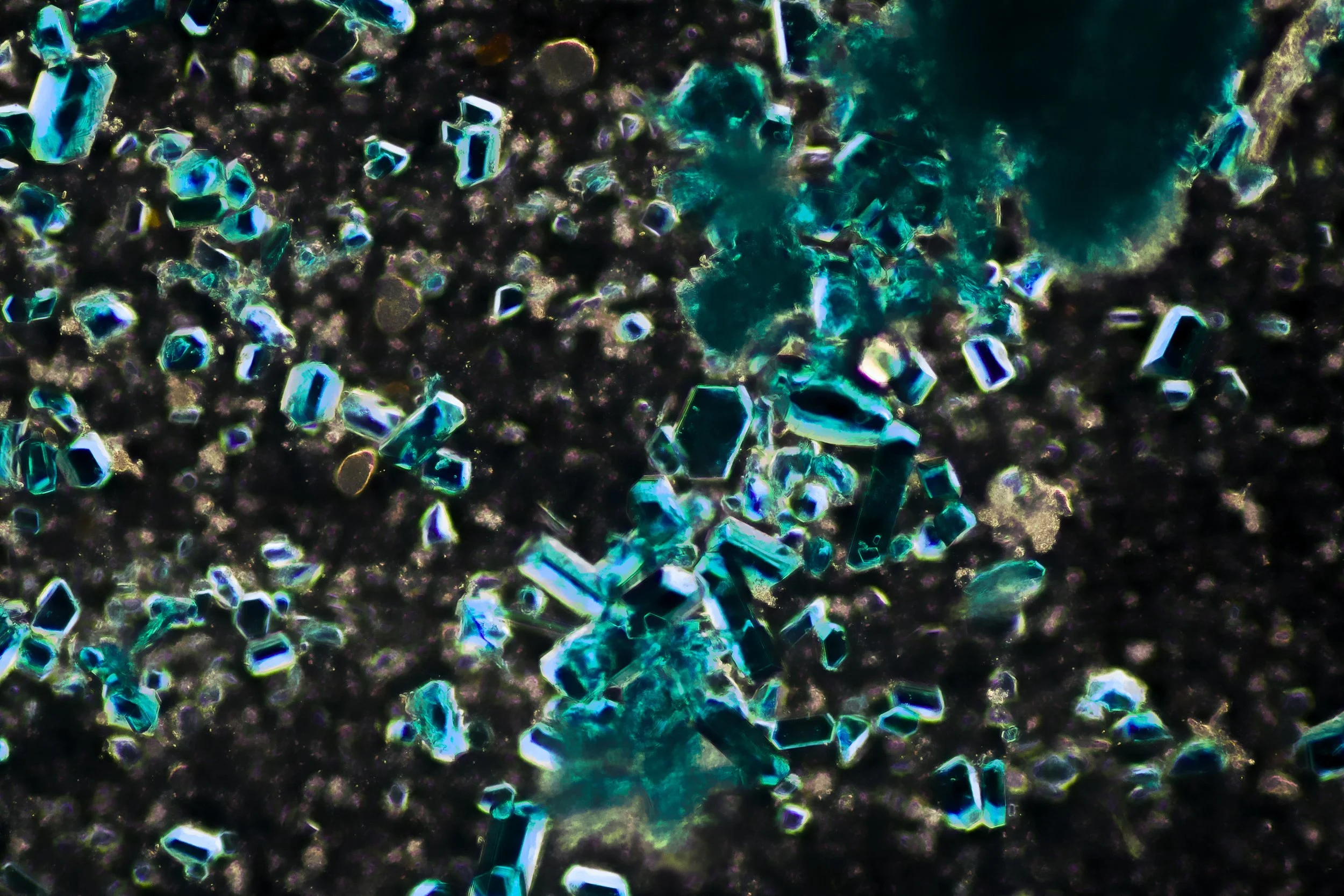
Microscopy at ASCUS Lab, Summerhall. Copper acetate ink under dark-field microscope.
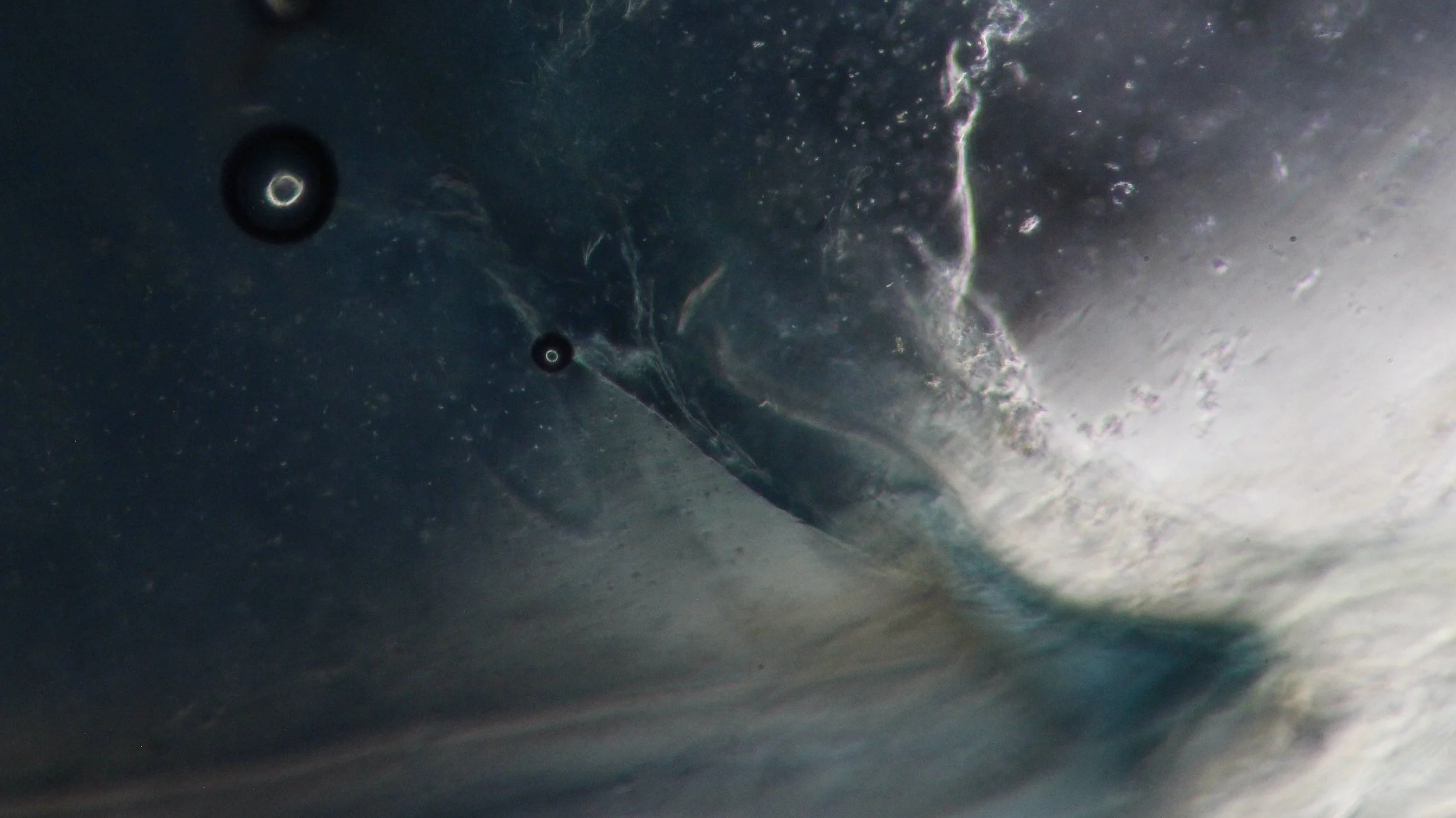
Microscopy at ASCUS Lab, Summerhall. Red cabbage ink under the microscope.
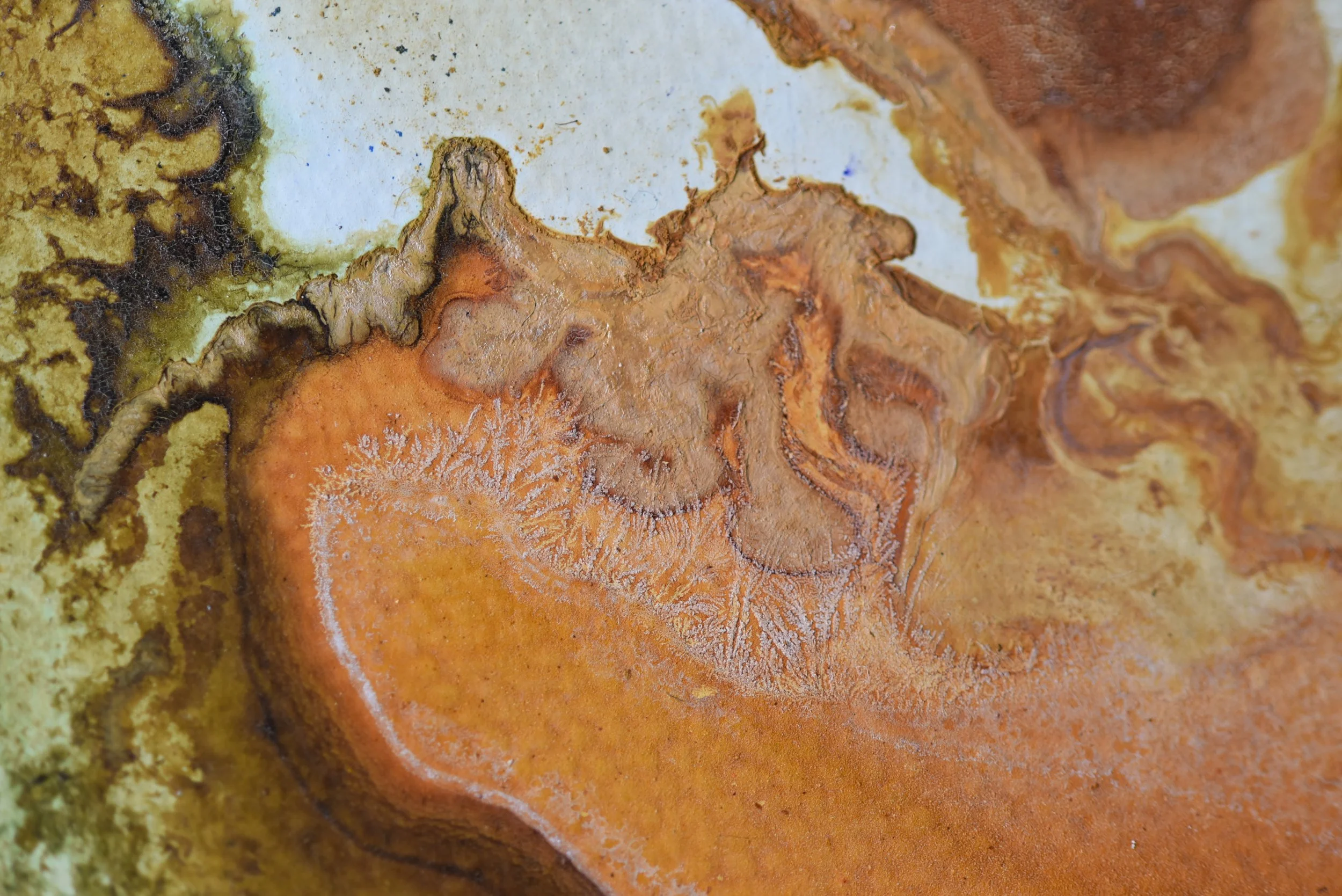
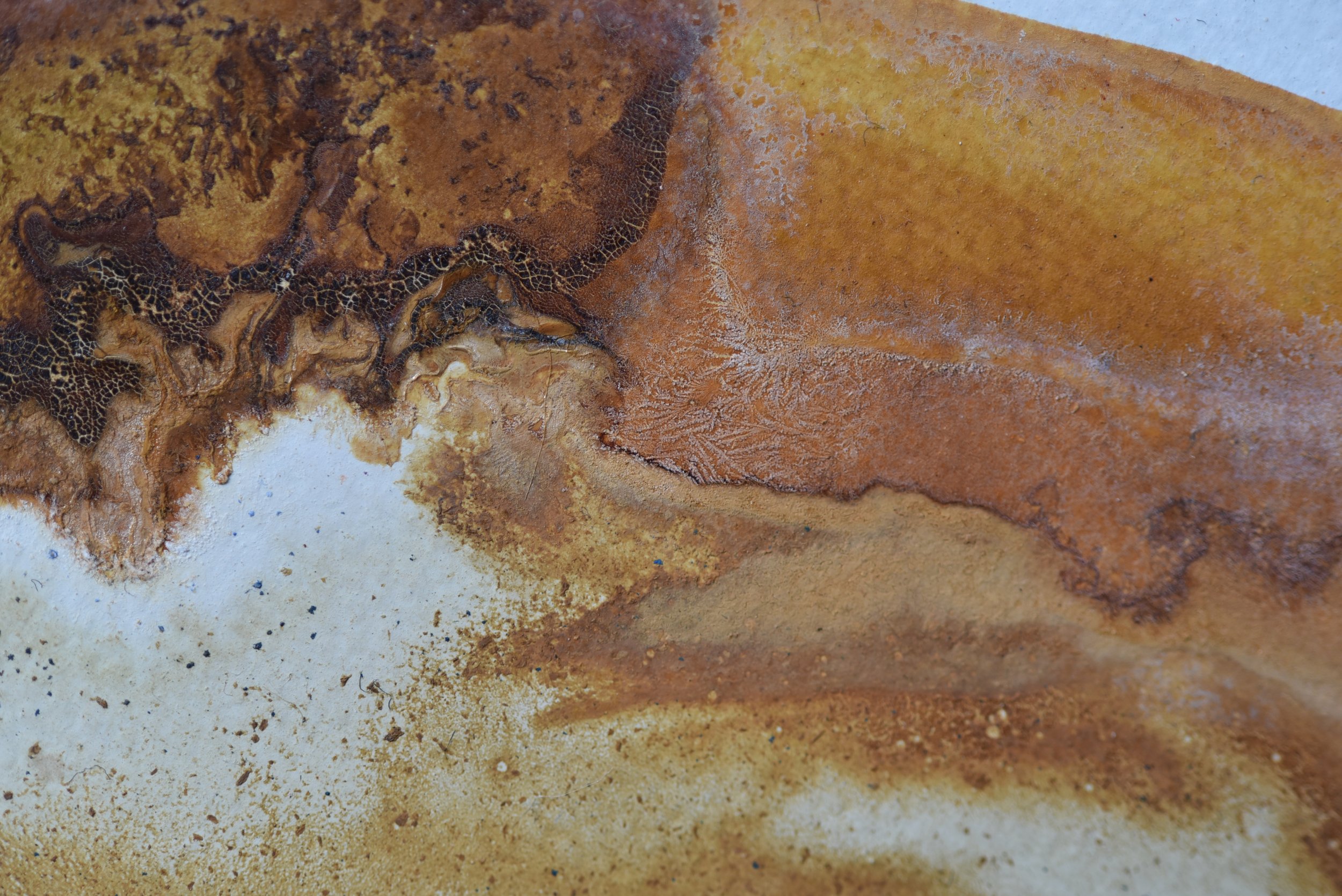
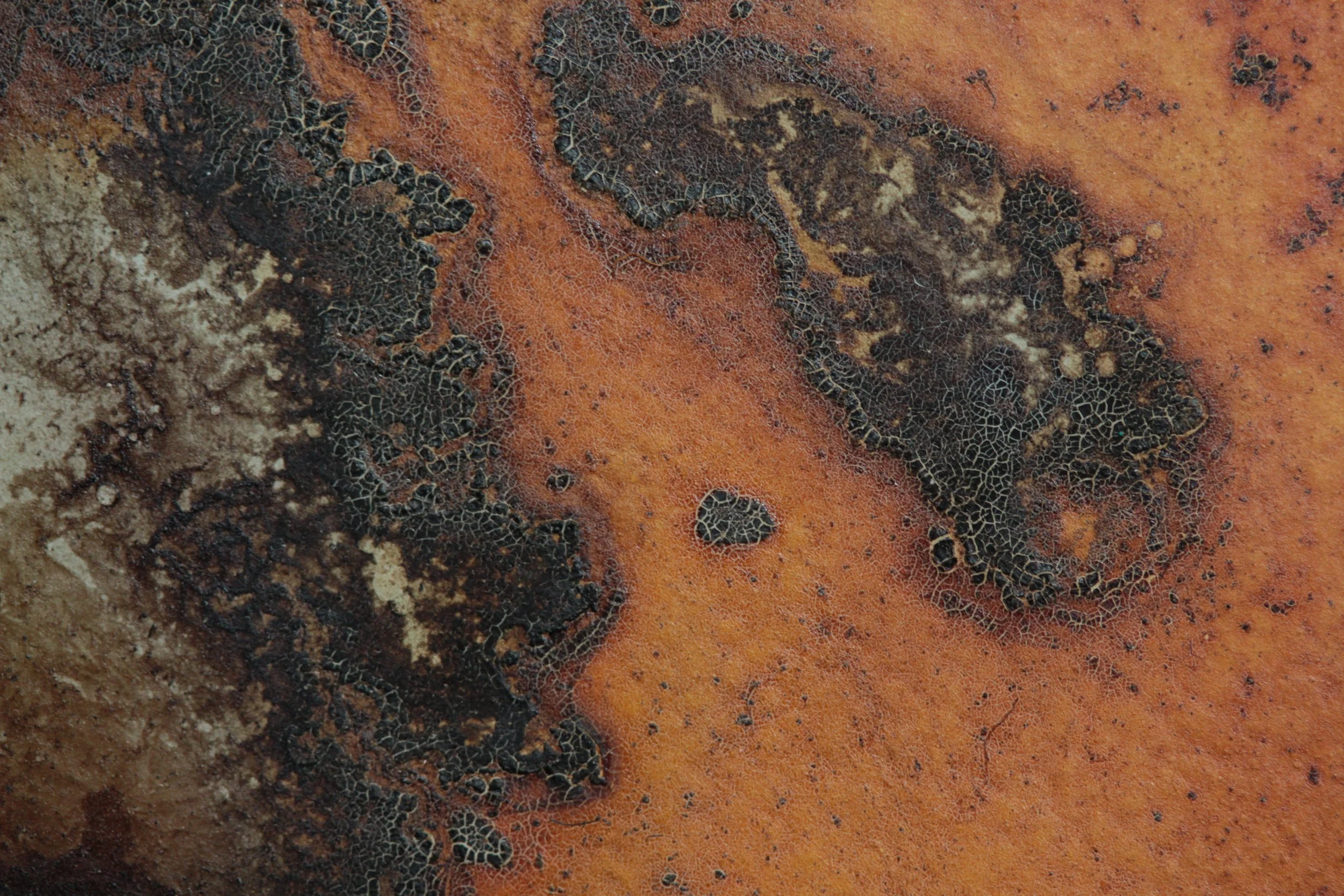
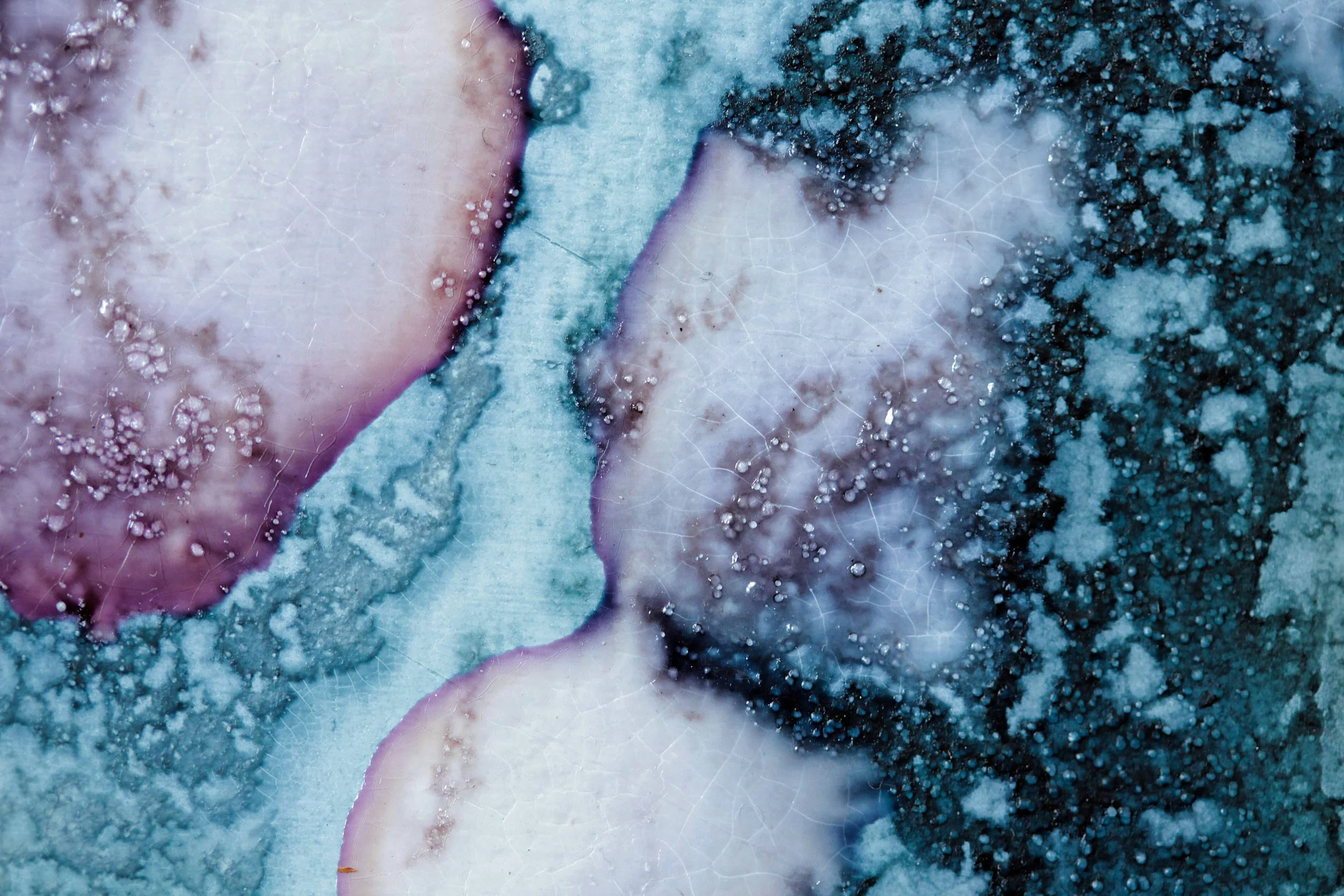
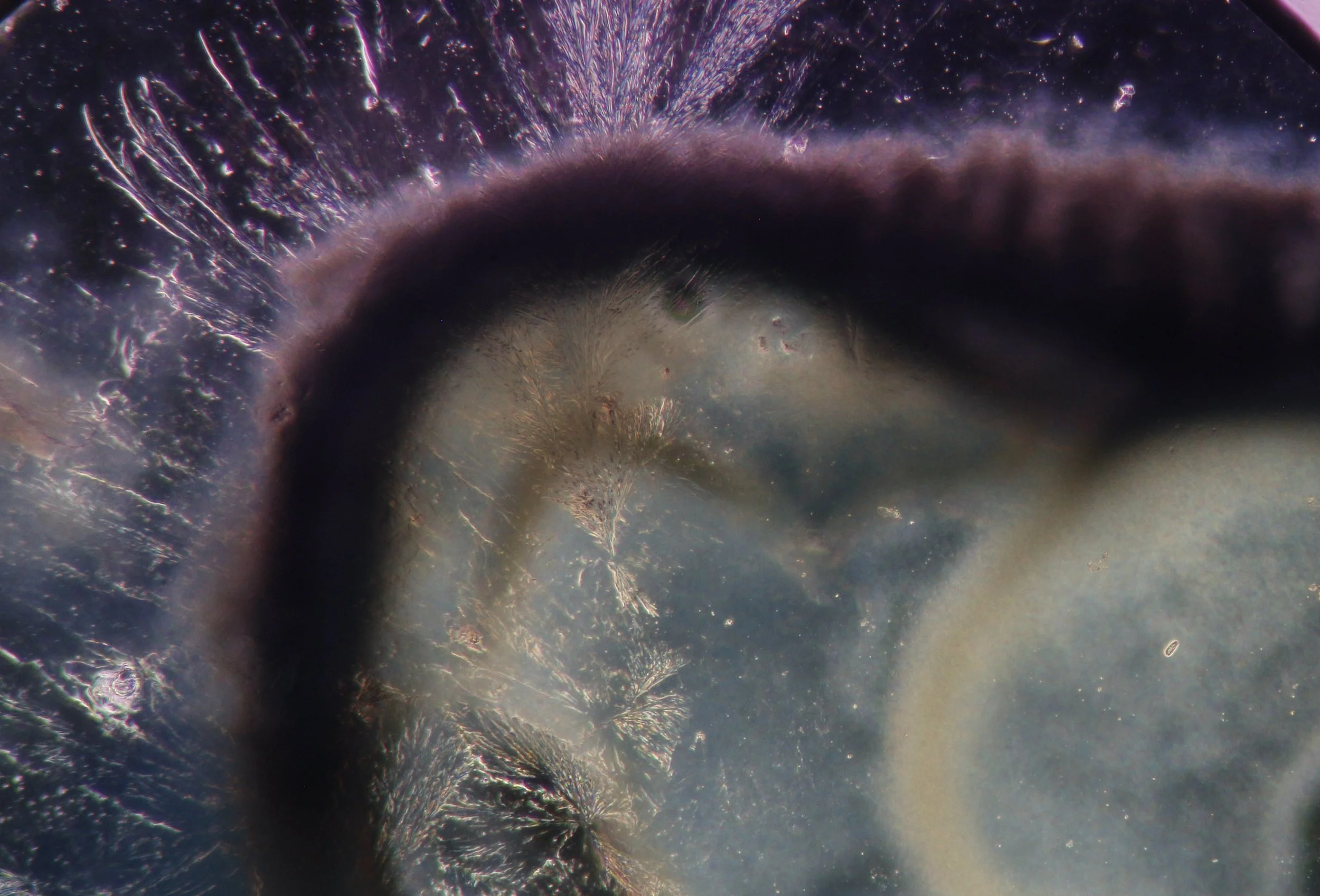
Microscopy at ASCUS Lab, Summerhall. Reaction between red cabbage ink and lye.
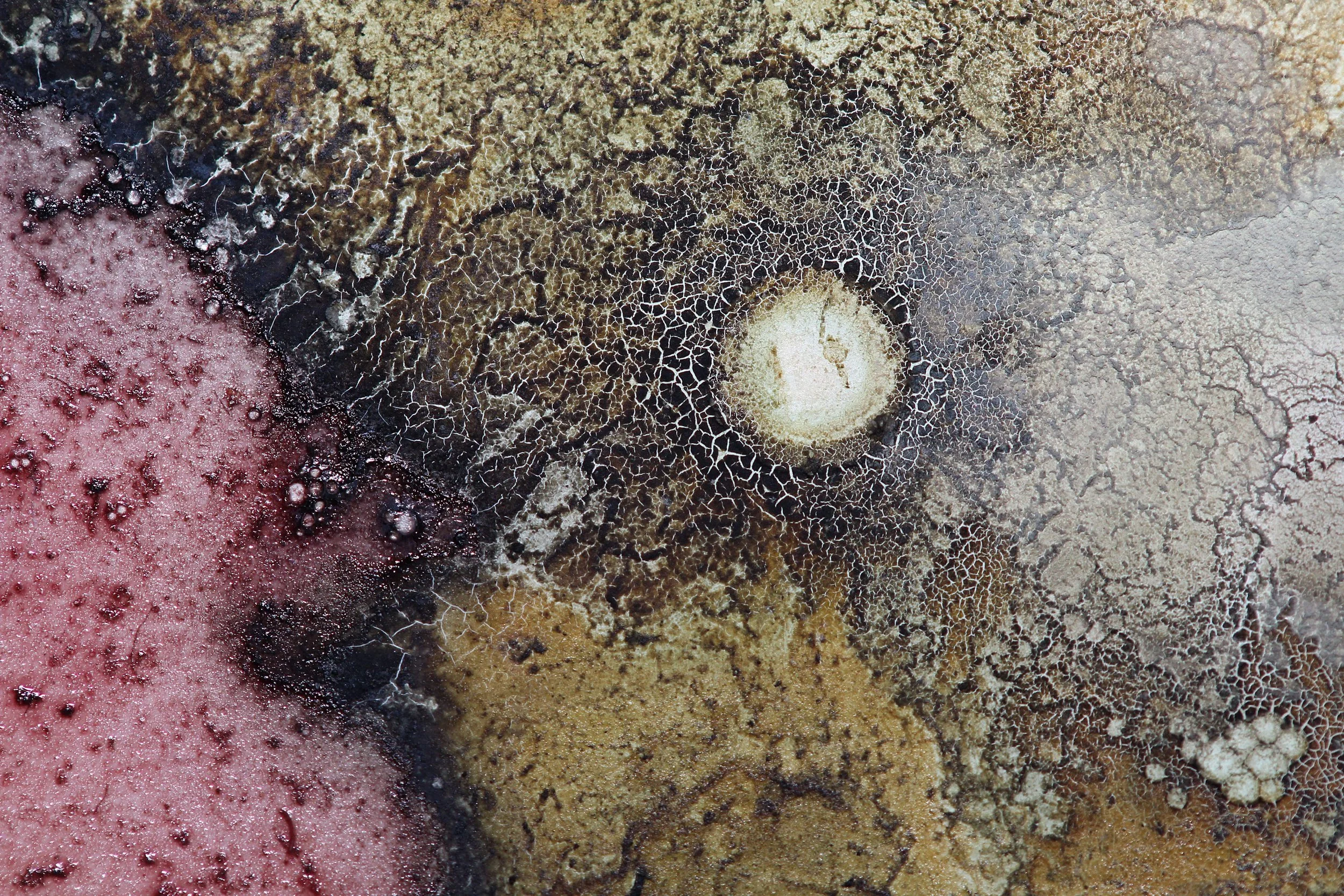
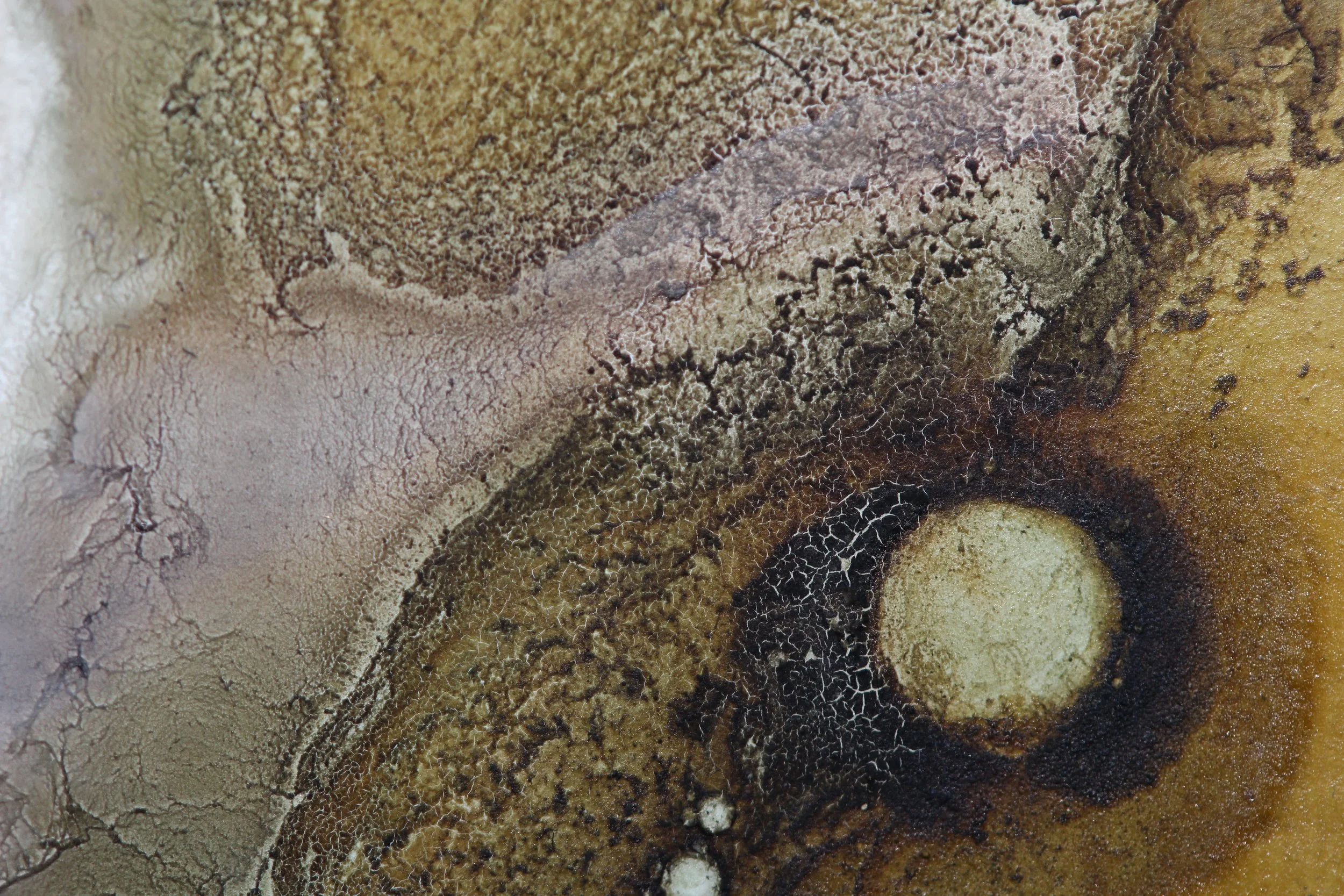
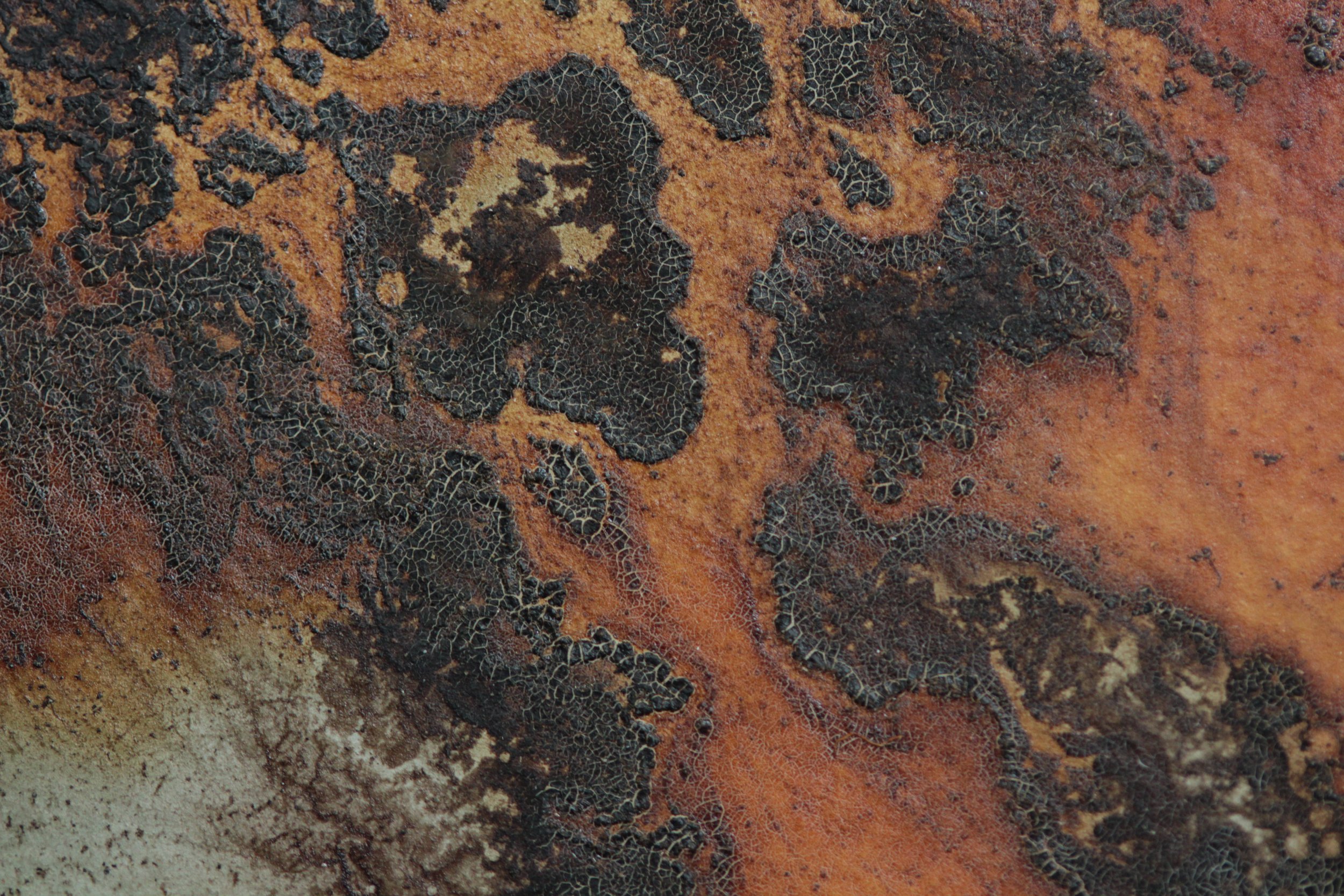
Microscopy at ASCUS Lab, Summerhall.
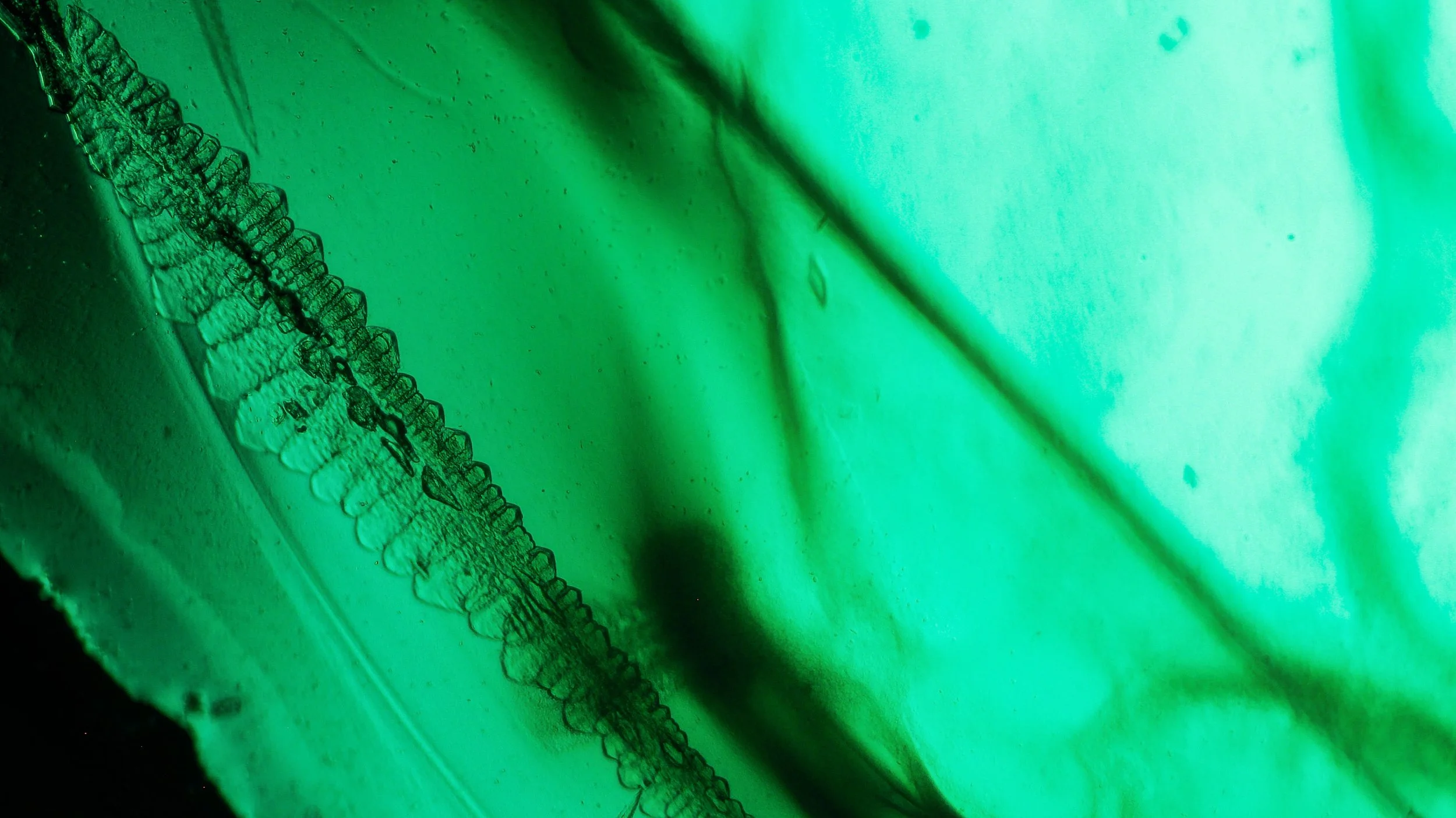
Microscopy at ASCUS Lab, Summerhall.
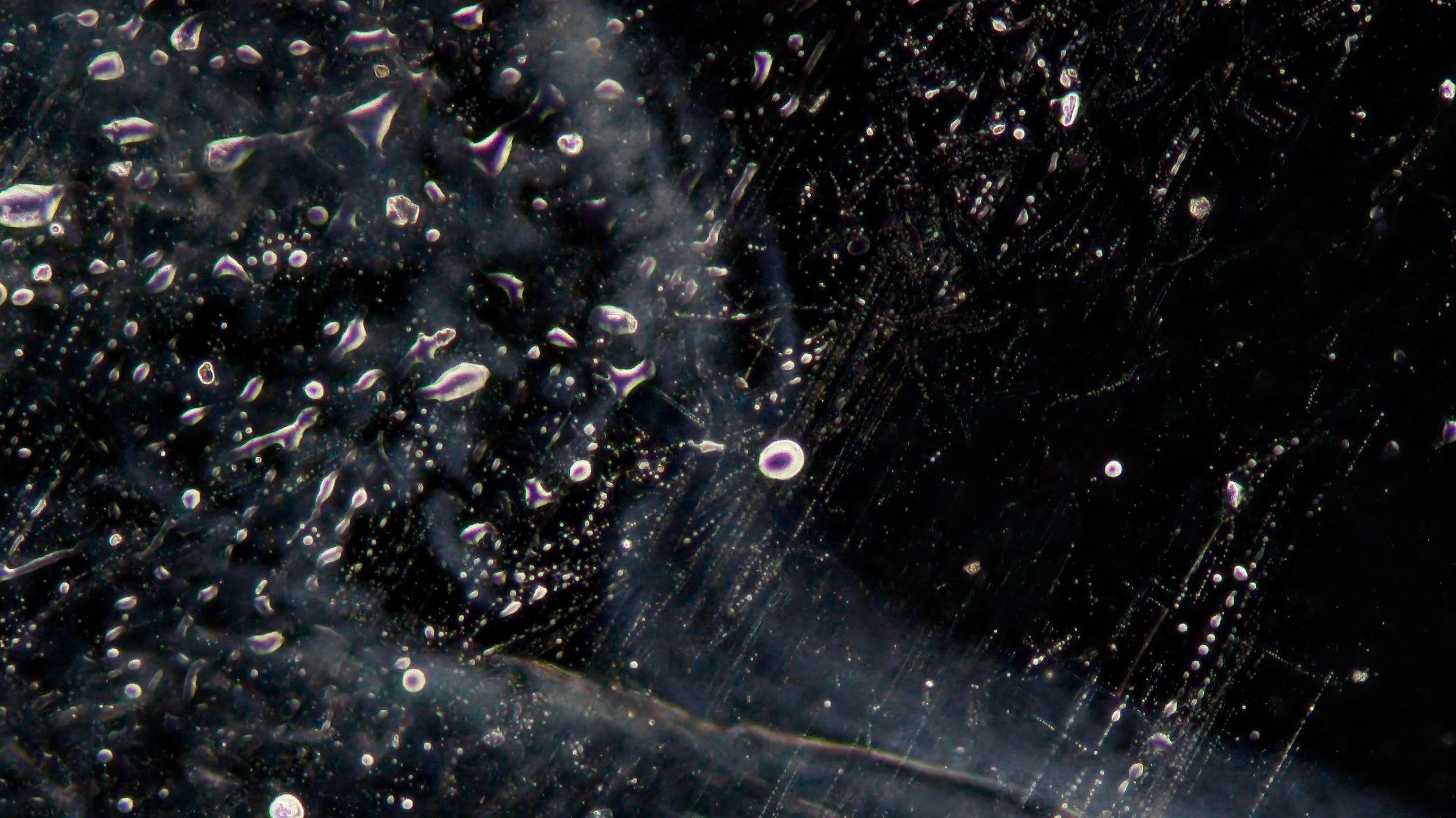
Microscopy at ASCUS Lab, Summerhall.
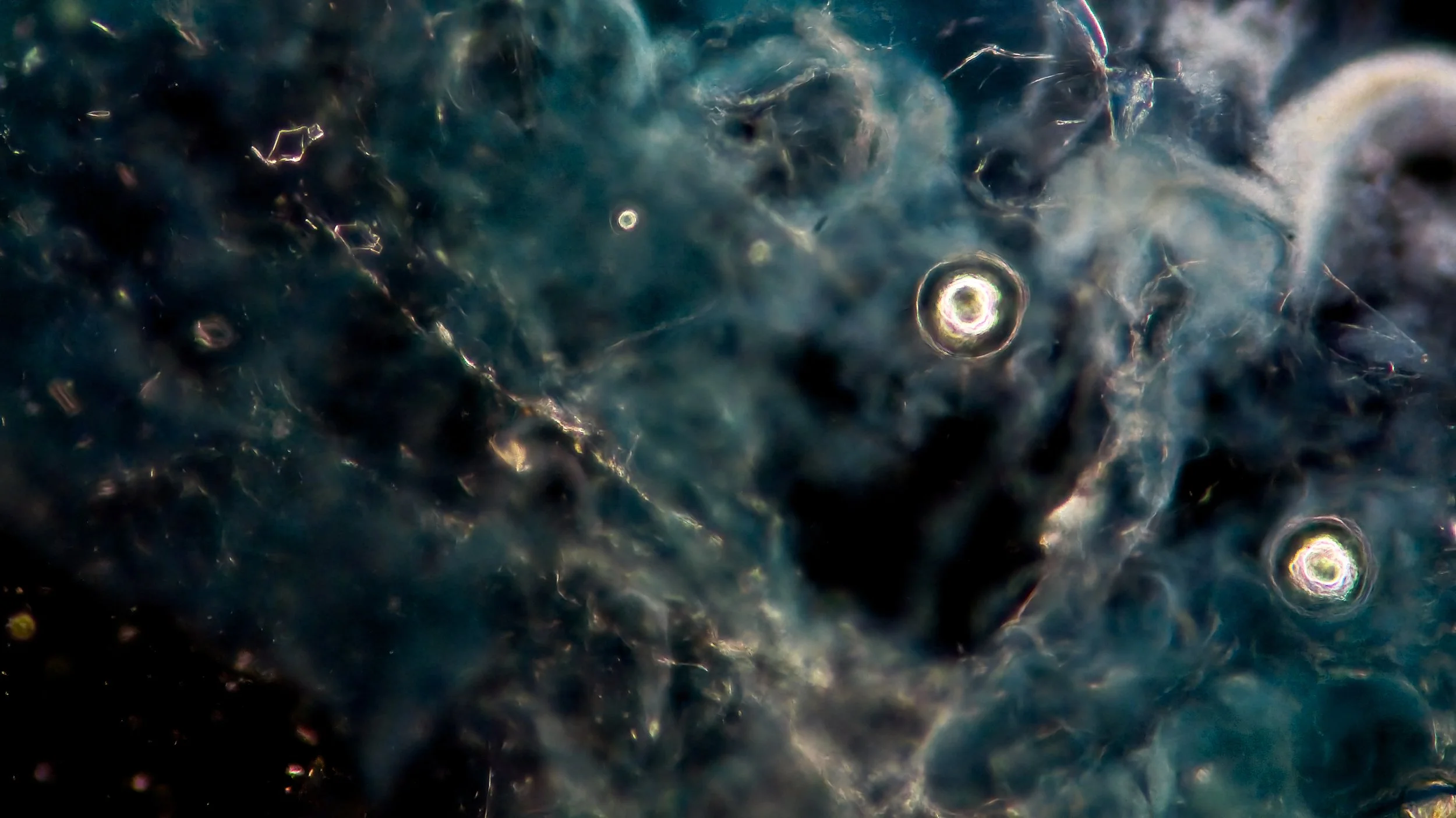
Microscopy at ASCUS Lab, Summerhall.
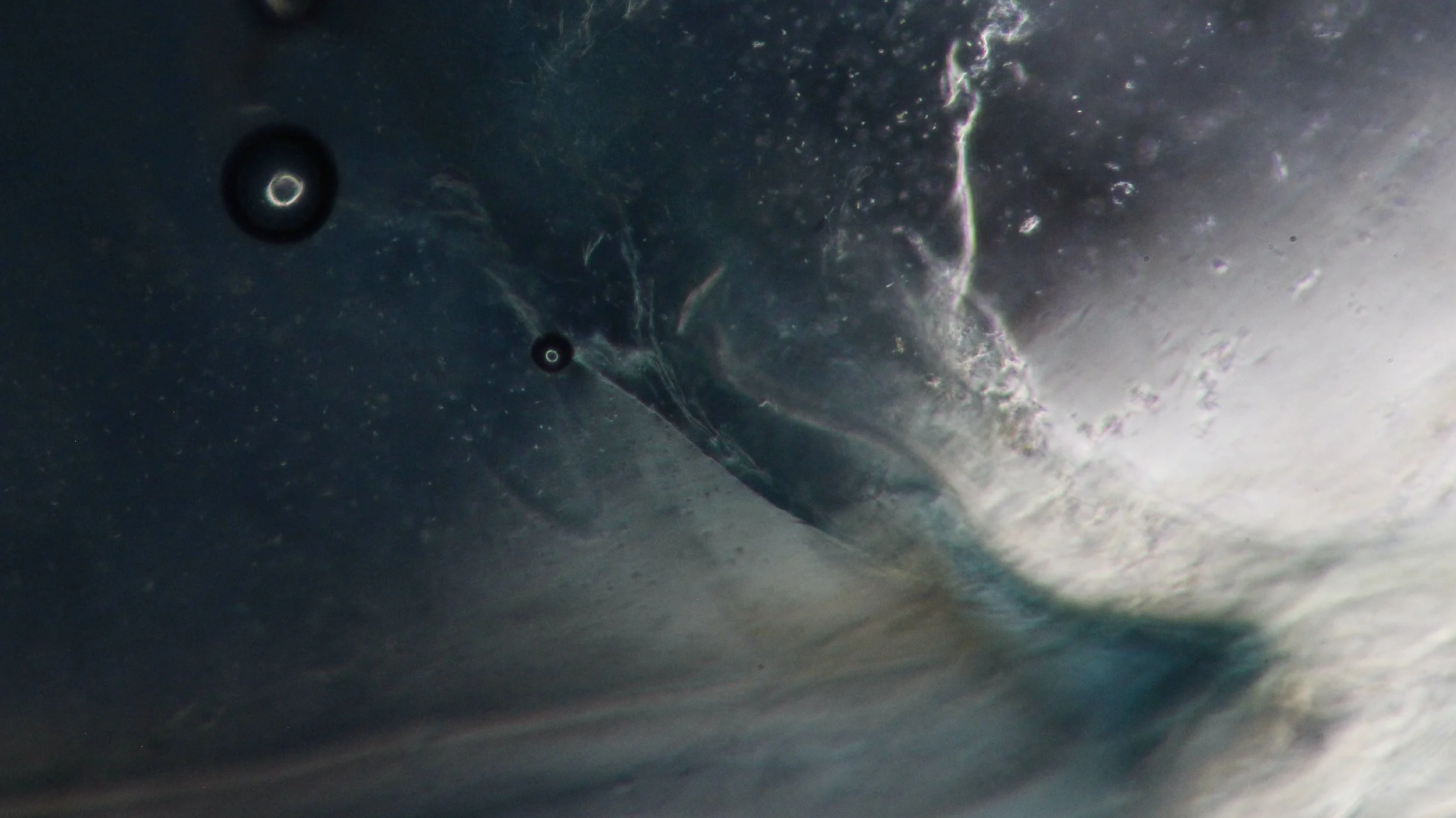
Microscopy at ASCUS Lab, Summerhall.
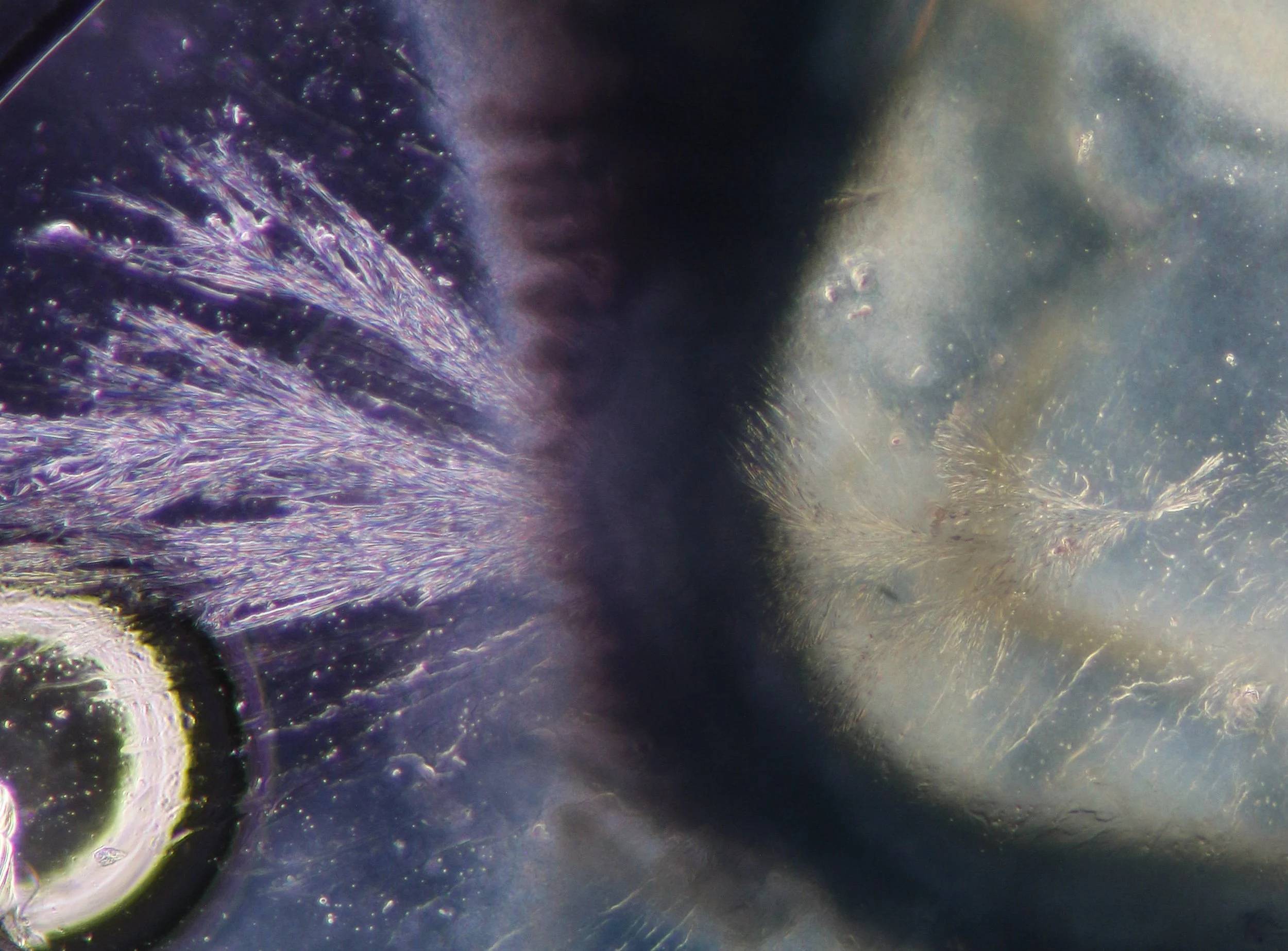
Microscopy at ASCUS Lab, Summerhall. Reaction between red cabbage ink and lye.